If you’re an MSP or cybersecurity leader, you’ve probably felt the gap: you can deliver real outcomes, but your marketing still doesn’t behave like a predictable growth engine.
It’s rarely because your team isn’t working hard. More often, it’s because technical markets punish unclear positioning, “generic” content, and unaligned sales/marketing motions. A strong fractional CMO closes that gap by bringing executive-level direction, without the commitment (or ramp time) of a full-time hire.
This guide is built for founders and leadership teams looking for MSP CMOs who understand the reality of long sales cycles, high-trust buying committees, and crowded categories.
Top fractional CMOs for MSPs & cybersecurity: At-a-glance
| Rank | Fractional CMO | Best for | What they’re strongest at |
| 1 | Alexej Pikovsky (NUOPTIMA) | MSPs + cybersecurity firms that want strategy + measurable execution | ROI-positive SEO/AI search/GEO + paid strategy tied to revenue outcomes |
| 2 | Kelley Marko (Chief Outsiders) | Cybersecurity + B2B tech teams scaling GTM | Positioning + demand + enablement with executive operating rhythm |
| 3 | Jeff Loeb (Chief Outsiders) | Cybersecurity software companies building pipeline | GTM + enablement + pipeline creation in complex categories |
| 4 | Lori Cohen (Chief Outsiders) | Cyber brands sharpening narrative + trust | Brand strategy that still respects metrics and outcomes |
| 5 | Casie Abello (CyberSec CMO) | Cybersecurity firms needing embedded leadership | Part-time CMO leadership + KPI-driven execution |
| 6 | Chris Downey (Reverb Strategic) | Early-stage cyber startups | Founder-aligned strategy + repeatable marketing systems |
| 7 | Michael Williamson (TechGrowth Insights) | Cyber + MSP/MSSP teams that need sharper differentiation | Intelligence-led positioning + revenue-engine buildout |
| 8 | Susan Towers (Towers Fractional Marketing) | MSPs professionalizing marketing | Fractional leadership + practical growth planning for services firms |
| 9 | Nicola Moss (The Fractional Marketeer) | MSPs/MSSPs refining their go-to-market | Practical marketing leadership for MSP-style growth challenges |
| 10 | Becky Freemal (The Market Exec) | MSPs wanting stronger messaging + strategic visibility | Fractional executive approach + MSP-focused marketing insight |
What Is a Fractional CMO (and Why This Model Works for MSPs and Cybersecurity)
A fractional CMO is a senior marketing leader who joins your business part-time (or on a defined engagement) to own strategy, priorities, and outcomes, usually by building the plan, aligning stakeholders, and driving execution through your internal team and partners.
For MSPs and cybersecurity firms, the model works because:
-
Trust takes repetition in technical categories, and fragmented marketing kills momentum.
-
Buying cycles are long, so you need a leader who can build a system, not just run campaigns.
- You often need executive judgment (positioning, packaging, channel strategy, sales enablement) more than you need “more activity.”
Fractional CMO vs Full-Time CMO vs Agency
A fractional CMO is not “an agency with a nicer title,” and it’s not just an advisor who sends a deck and disappears. The right fit depends on your stage and your bottleneck.
Which option fits your stage?
| Option | Best when | Watch-outs | Typical outcome |
| Fractional CMO | You need exec-level strategy + leadership now, but not full-time | Wrong hire = lots of opinions, not enough operating cadence | Clarity, focus, systems, and measurable pipeline traction |
| Full-time CMO | You have PMF + budget + the need for daily leadership | Hiring too early can lock you into the wrong GTM motion | Deep ownership of brand, team, and long-term growth |
| Agency | You already have a clear strategy and need specialist execution | Agencies can’t replace executive direction or cross-team alignment | Faster output (ads/content), but mixed strategic consistency |
The Growth Bottlenecks MSPs and Cybersecurity Companies Hit (and What a Strong Fractional CMO Fixes)
Most MSP and cybersecurity teams don’t fail because the market is “too competitive.” They fail because the business can’t translate expertise into a simple, credible buying narrative.
A strong fractional CMO typically addresses:
-
Positioning that sounds like everyone else
(“24/7 support,” “best-in-class security,” “we’re your partner.”)
The fix: sharper category angles, proof-first messaging, and offers tied to outcomes.
-
Lead gen that creates meetings, not revenue
The fix: tighter ICP, intent-led demand capture, and sales enablement that supports conversion.
-
Trust debt in high-stakes buying committees
The fix: authority content, validation assets, and a consistent “why us” story across the funnel.
-
Unproductized offers (especially in security)
The fix: packaged tiers, clear scope boundaries, QBR motion, and expansion paths.
-
Marketing that’s busy, but not compounding
The fix: a measurement model and operating cadence leadership can actually run.
How to Choose the Right Fractional CMO for a Technical Business
Use this as your practical vetting filter:
-
Technical-market fluency
They should understand MSP and cyber buying realities: risk, stakeholders, proof, and long decision cycles.
-
Pipeline math + reporting discipline
Look for someone who talks in dashboards, conversion rates, and contribution, not vibes.
-
Messaging and offer architecture strength
If they can’t simplify your narrative, every channel will underperform.
-
Sales alignment experience
MSP and cybersecurity growth is rarely “marketing-only.” Sales enablement and handoff discipline matter.
-
Operational leadership
The best fractional CMOs can lead internal teams, agencies, and vendors without chaos.
What MSP CMOs Should Deliver in the First 30/60/90 Days
A strong engagement usually looks like this:
-
First 30 days: Diagnose + prioritize
ICP clarity, competitive narrative, funnel baseline, tracking cleanup, and a focused plan.
-
Days 31–60: Build the system
Offer packaging, messaging architecture, channel strategy (inbound/ABM/partners), and enablement.
-
Days 61–90: Create repeatability
Execution cadence, content/demand engine, reporting, and a pipeline model leadership trusts.
Best Fractional CMOs for MSPs and Cybersecurity Companies
1. Alexej Pikovsky (NUOPTIMA)

If you’re in MSP or cybersecurity and your marketing feels like “lots of motion, not enough momentum,” Alexej is the type of fractional leader who starts by simplifying the story, then ties every channel back to measurable revenue outcomes.
Best fit
- MSPs and cybersecurity firms that want senior-level strategy plus a realistic path to execution (not a strategy deck that dies in a folder)
- Teams ready to build an engine across authority + demand capture, rather than betting everything on one channel
What you’ll typically get
- A sharper go-to-market narrative (positioning, ICP clarity, offer packaging)
- An ROI-positive acquisition plan that combines SEO + AI search/GEO foundations with paid where it makes sense
- An operating cadence leadership can actually run: priorities, reporting, and decision-making rhythm
Credibility snapshot
- NUOPTIMA is built around ROI-positive growth across SEO/AI-era visibility and paid acquisition – exactly the “plan + execution” combo technical teams struggle to operationalize.
Smart questions to ask early
- “Where do you usually find the biggest leak for MSP/cyber teams: positioning, conversion, or sales handoff?”
- “What would you expect to improve inside 30–60 days if we’re on the right track?”
2. Kelley Marko (Chief Outsiders)

Kelley is the kind of fractional leader you bring in when you need a grown-up GTM cadence: clear priorities, clear measurement, and fewer “random acts of marketing.”
Best fit
- Cybersecurity and B2B tech teams that need tighter GTM alignment and a scalable demand system
What she typically drives
- GTM strategy + positioning refinement
- Demand generation that’s built to compound (not spike)
- Sales enablement that improves conversion quality, not just lead volume
Credibility snapshot
- Her expertise spans cybersecurity and revenue-engine work across GTM, demand, enablement, and ops.
Smart questions to ask early
- “How do you define ‘lead quality’ in a long-cycle technical sale?”
- “What’s your 90-day plan when pipeline is noisy but not converting?”
3. Jolynn Applebaum (Profit Edge Strategies)
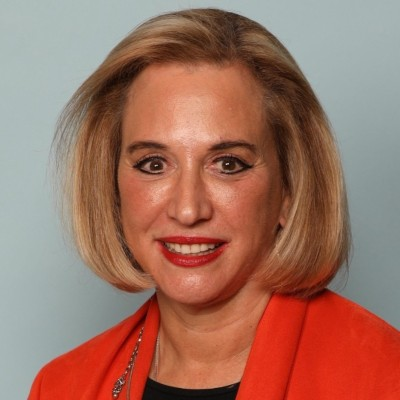
Jolynn reads like the antidote to founder-led marketing chaos. She’s direct about owning outcomes, not just giving advice, and she’s explicit about working with MSPs and regulated/complex tech.
Best for
- MSPs, MSSPs, and compliance-driven tech companies that need a leader to tighten GTM, align execution, and build a predictable engine
- Teams in a growth inflection point where “busy” doesn’t equal “effective”
What she typically helps you build
- Positioning and messaging that’s sharper and easier to sell
- A demand engine aligned to your sales motion (inbound/outbound/ABM)
- Systems, metrics, and processes that reduce guesswork
Credibility snapshot
- Her practice is explicitly built around fractional leadership that owns direction and outcomes, operating as part of the leadership team, not as a bolt-on consultant.
Smart questions to ask early
- “What would you change first if our leads exist but deals keep stalling?”
- “How do you define ‘pipeline quality’ for MSP/MSSP sales cycles?”
4. Michael Williamson (TechGrowth Insights)

When growth decisions are expensive to get wrong, Michael is a strong fit, especially in cybersecurity and other complex B2B markets where differentiation and commercial strategy have to be tight.
Best for
- Cybersecurity and complex B2B tech firms that need GTM judgment (positioning, pricing, sales + marketing alignment)
- Founder-led or PE-backed teams that want a more board-level commercial approach
What he typically helps you sharpen
- Positioning and competitive strategy that sales can actually use
- Commercial levers beyond “more marketing” (product, pricing, sales motion, customer growth)
- A decisive operating rhythm around outcomes
Credibility snapshot
- He runs TechGrowth Insights as an “intelligence-led” GTM growth leadership practice with explicit cybersecurity focus areas and structured service packages.
Smart questions to ask early
- “What’s your method for translating competitive intel into win-rate improvements?”
- “Where do you usually see deals break down post-demo and how do you fix it?”
5. Becky Freemal (The Market Exec)

If your marketing is technically accurate but not compelling, Becky’s a strong contender. Her edge is in making complex ideas land with real humans, without dumbing the offer down.
Best for
- Cybersecurity and B2B tech teams that need a clearer story buyers remember
- Leaders who want tighter alignment between marketing strategy and business strategy
What she typically helps you improve
- Narrative clarity that supports conversion (not just “brand polish”)
- Messaging frameworks that connect emotionally while staying evidence-based
- Executive alignment so marketing stops zig-zagging
Credibility snapshot
- She works as a fractional executive and focuses heavily on tech/B2B SaaS, including cybersecurity, with a track record rooted in strategy + alignment.
Smart questions to ask early
- “What would you change so prospects can explain us in one sentence?”
- “How do you make narrative work show up in pipeline, not just perception?”
6. Casie Abello (CyberSec CMO)

Cybersecurity teams that want someone to set priorities, run the plan, and keep KPIs honest, without turning marketing into theater – that’s exactly who Casie is built for.
Best for
- Cybersecurity companies that need embedded leadership and a tighter operating cadence
- Teams that want clearer KPIs and better execution management
What she typically helps you implement
- A focused roadmap (what to do, what to stop doing)
- KPI structure and reporting discipline
- Stronger coordination across internal teams and vendors
Credibility snapshot
- Demonstrable fractional leadership for cybersecurity companies and scope across strategy, execution leadership, and measurement.
Smart questions to ask early
- “What KPIs do you put in front of founders weekly to prevent drift?”
- “How do you handle cybersecurity messaging where proof and restraint matter?”
7. Chris Downey (Reverb Strategic)

For early-stage cybersecurity firms that need someone who can build the machine, not just comment on it, Chris is the most compelling fit.
Best for
- Cybersecurity startups building pipeline foundations fast
- Founder-led teams that need a structured GTM plan with hands-on leadership
What he typically helps you build
- Messaging and demand foundations that can scale
- Practical channel prioritization (what’s worth your time right now)
- Execution cadence that doesn’t collapse under constraints
Credibility snapshot
- He positions directly as a fractional leader for B2B cybersecurity startups and backs that with a deep operator background across major tech companies.
Smart questions to ask early
- “If we only had two channels for the next 90 days, what would you choose, and why?”
- “What’s the fastest way to get signal without burning budget?”
8. Laura Johns (The Business Growers)

Laura is a clear MSP-specific pick. The Business Growers publishes and offers fractional leadership explicitly for MSP and IT marketing, which makes her a practical option if you want someone who speaks the MSP language without translation.
Best for
- MSPs and IT service firms that want executive-level direction + execution support
- Teams looking to professionalize marketing without building a large internal department
What she typically helps you improve
- Strategy-to-execution clarity (less “random marketing,” more planned cadence)
- MSP-oriented lead gen and conversion support
- A structured approach to leadership decisions: in-house vs fractional vs partners
Credibility snapshot
- Laura is founder/CEO of The Business Growers and author on related MSP fractional content.
Smart questions to ask early
- “What do you see MSPs getting wrong most often: offers, messaging, or follow-up?”
- “How do you align marketing activity with recurring revenue priorities?”
9. Susan Towers (Towers Fractional Marketing)

Susan is another MSP-relevant option, with external industry coverage describing her focus on SMB IT professional services and software companies.
Best for
- MSPs (and adjacent IT professional services) that need stronger positioning and demand generation discipline
- Teams that want measurable growth without over-hiring
What she typically helps you build
- Positioning that’s clearer and less commodity
- Practical demand generation direction and marketing execution management
- A marketing plan tied to business goals and ROI
Credibility snapshot
- She leads Towers Fractional Marketing and has published MSP-specific guidance on integrating fractional leadership into MSP operations.
Smart questions to ask early
- “Where do you typically start with MSPs: positioning, proof assets, or lead capture?”
- “How do you keep execution consistent when the internal team is stretched?”
10. Nicola Moss (The Fractional Marketeer)

Nicola is very directly positioned for MSPs and B2B tech, and she’s explicit about the blend most teams actually need: strategic direction plus hands-on help.
Best for
- MSPs, MSSPs, VARs, and B2B tech consultancies that need senior marketing leadership without the full-time overhead
- Teams that want lead generation + brand authority to move together (not separately)
What she typically helps you improve
- A clear strategy and messaging that resonates with the right buyers
- More consistent lead flow (without burning credibility)
- Better authority-building, so you’re not always “explaining from scratch”
Credibility snapshot
- Her practice is explicitly focused on fractional marketing for MSPs and B2B tech, with services centred on leadership, direction, and measurable execution.
Smart questions to ask early
- “What do you adjust first when MSP leads are coming in but they’re the wrong fit?”
- “How do you build authority without sounding generic?”
Where NUOPTIMA Fits
A fractional CMO can set direction, align stakeholders, and build the operating system. The common failure mode is execution drift – good strategy, inconsistent follow-through.
NUOPTIMA positions itself to close that gap with ROI-positive acquisition across SEO, AI search/GEO, paid acquisition, and strategy, so leadership decisions translate into compounding visibility and pipeline.
If you’re leading an MSP and want the strategy to reflect what the market is actually rewarding right now, these NUOPTIMA reads are useful context:
- Future of Managed Services (what shifts are pressuring margin + growth)
- MSP Market Trends (how trends link to valuation quality)
- MSP M&A Signals (what reprices risk in diligence)
- How to Vett MSP Brokers (a diligence-minded checklist)
Final Thoughts
The best fractional CMOs in technical markets don’t just “do marketing.” They clarify what you sell, who it’s for, how you win, and how you measure progress, then they build the cadence that makes growth repeatable.
If you want to choose well, match your hire to your bottleneck:
-
Positioning + differentiation problem? prioritize narrative operators.
-
Pipeline quality problem? prioritize GTM and reporting rigor.
- Execution drift problem? prioritize leaders who can run teams, vendors, and systems
FAQ
They typically own the marketing “operating system”: positioning, offer packaging, channel strategy, reporting, and the cadence that aligns sales + marketing so pipeline becomes more predictable.
The main advantage of CMOs is that they turn marketing into a measurable growth engine, by clarifying positioning, aligning sales and marketing, and focusing spend and effort on the activities that reliably create pipeline and revenue.
You should expect clarity and measurement in the first 30 days, and early traction signals (conversion improvements, better lead quality, clearer ICP) within 60–90 days, assuming you have a real execution path.
For MSPs: lead quality, close rate by segment, sales cycle length, expansion/NRR, and offer-level gross margin. For cyber SaaS: pipeline velocity, CAC payback, stage conversion, win rates by use case, and ABM/account penetration.
Inbound can work, but only if your content is proof-led and differentiated. Many MSP/cyber firms do best with a blended model: inbound authority + targeted outbound/ABM for high-fit accounts.
The best ones create shared language (ICP + messaging), define lead stages, tighten follow-up SLAs, and build enablement assets sales actually uses.
When your growth motion is proven, the team size demands daily leadership, and you have enough data to hire a full-time CMO against a clear mandate (not a vague hope).