Stop treating evergreen content seo as a static library. It is a decaying asset. Sustainable search dominance requires a repeatable operating system: detection, diagnosis, refresh, distribution, and AI-citation readiness. This framework generates conversion-ready pipelines rather than vanity traffic. Use these six refresh tactics to stop decay and compound your organic authority. NUOPTIMA helps brands win in Google and generative engines to ensure your brand remains the definitively cited answer in every search experience.
Key Takeaways
- Evergreen content is a decaying asset, so treat it as a repeatable operating system of detection, diagnosis, refresh, distribution, and AI-citation readiness.
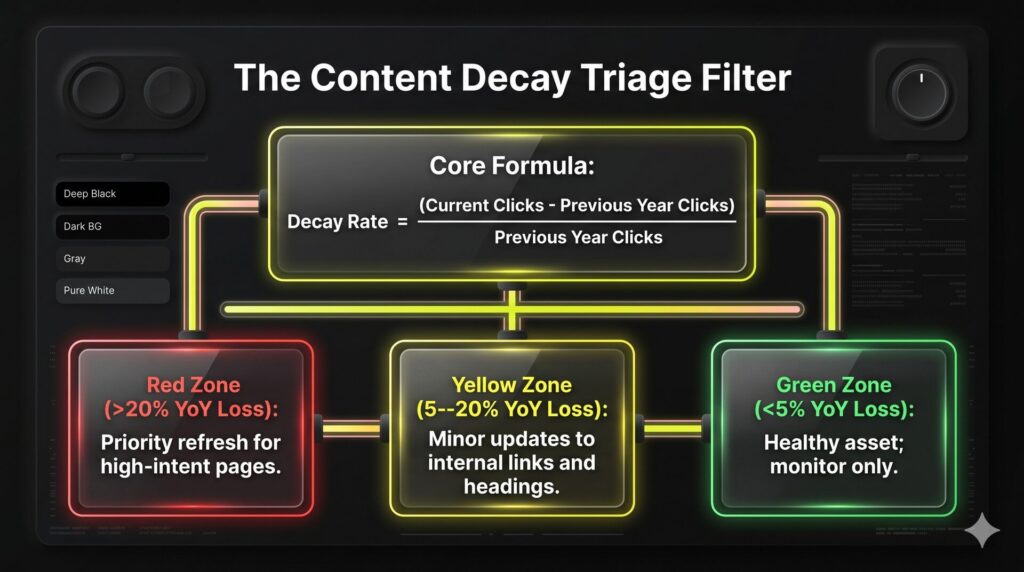
- Calculate decay with the year-over-year click formula in Google Search Console; a decline over 20% flags a page as a refresh candidate.
- Triage by severity: red is over 20% loss (priority refresh), yellow is 5 to 20% (minor link and heading updates), green is under 5% (monitor only).
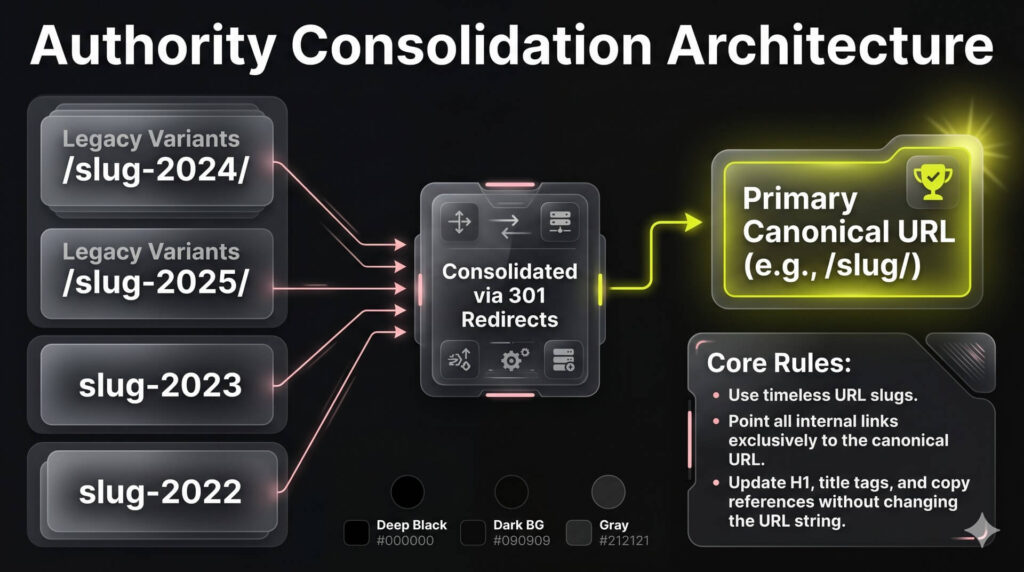
- Keep one permanent, timeless URL slug like /best-seo-tools/ and 301 redirect dated variants to it, so updates preserve link equity instead of resetting authority each year.
- Engineer assets for AI citations with entity-rich definitions, two-sentence answer blocks at the top of sections, and structured tables that generative engines preferentially surface.
1. Map Content Decay with a Data-Driven Triage System
Effective evergreen content seo requires a measurable control panel to identify decay before it craters your pipeline. Move beyond guessing which pages are old by calculating your decay rate, a core diagnosis component during an SEO audit SaaS platforms rely on for structural maintenance. Use the YoY formula: (Current Clicks, Previous Year Clicks) / Previous Year Clicks.
A decline of >20% YoY in Google Search Console (GSC) marks an asset as a refresh candidate. Track GSC clicks, impressions, and average position alongside GA4 sessions and conversions. Never panic-refresh seasonal pages without checking YoY context; a winter dip for a summer guide is context, not decay.
Apply this triage rule to prioritize high-intent assets:
- Red (>20% loss): Priority refresh for high-intent pages.
- Yellow (5 to 20% loss): Minor updates to internal links and headings.
- Green (<5% loss): Healthy asset; monitor only.
This objective framework ensures your team focuses resources on pages driving organic revenue instead of guessing.
2. Diagnose Performance Gaps Before Committing to a Rewrite
Most refresh programs fail because they treat every traffic drop as a content problem. Diagnosing the specific failure point prevents wasted rewrites and focuses resources on high-impact fixes. Use this diagnostic matrix to determine the root cause:
- Impressions down + clicks down: Ranking or relevance issue caused by intent mismatch or competition.
- Impressions flat + CTR down: SERP presentation issue such as weak titles or AI Overview displacement.
Execute a minimum GSC workflow to isolate variables. Compare the current three-month period to the previous year and navigate to the Pages tab. Sort by click difference to identify high-priority losses, then inspect the Queries tab for those pages to see which specific terms lost visibility.
This data dictates the decision output. Choose a CTR fix for metadata, a content refresh for depth, or reference a technical SEO checklist B2B teams use to rule out backend crawling errors or indexing regressions. Never commit to a full rewrite until the data confirms the copy is the bottleneck.
3. Refresh Content Packaging to Reclaim CTR and AI Visibility
Rankings often remain stable while CTR declines because AI Overviews and SERP features cannibalize organic real estate. This compression makes packaging edits your fastest ROI lever for evergreen content seo. Replace vague “Ultimate Guide” headlines with outcome-driven titles that signal immediate value to users and generative engine crawlers.
Tighten your lead by answering the search query within the first two sentences. This increases extractability for featured snippets and AI citations. Integrate “extractable blocks” to help AI engines parse and trust your data:
- Concise definitions
- Numbered execution steps
- Mini-FAQ with 2 to 3 high-intent questions
Packaging refreshes are significantly cheaper than full rewrites. They allow you to reclaim CTR and dominate the answer layer without the overhead of new production. Position your brand as the definitive source before competitors occupy the citation layer. This low-effort fix protects your traffic from ongoing SERP changes.
4. Decouple Seasonal Messaging from Evergreen URL Structures
New yearly URLs (e.g., /best-saas-2026/) reset link equity to zero and fragment domain authority. This forces teams to rebuild search visibility from scratch every cycle. Instead, classify content into two categories:
- Pure evergreen: Topics with steady year-round demand.
- Seasonal-evergreen: Assets with predictable annual spikes.
To master evergreen content seo, maintain one permanent URL to preserve entity authority. Update time-sensitive elements annually to maintain backlink equity while meeting current intent. Refresh these components:
- Title tags and H1s reflecting the current year.
- Screenshots, concrete data points, and tool recommendations.
- Meta descriptions and FAQ schema optimized for LLM citation.
Execute refreshes 45 to 60 days before peaks. This allows traditional search engines and generative LLMs to index updates before demand rises. Tag these assets as “Seasonal-Evergreen” in your content inventory. This prevents decay triage from misidentifying natural off-season dips as performance loss. Decoupling URL stability from year-based messaging ensures your authority compounds indefinitely while remaining relevant to immediate intent.
5. Standardize Year Policies to Protect Link Equity
B2B teams often fragment their authority by launching new URLs for every calendar year. To prevent cannibalization, establish a strict “year policy” to govern your evergreen content seo. This ensures your highest-performing assets compound authority rather than resetting it every January.
Implement these technical standards for your URL architecture:
- Use timeless slugs (e.g., /best-seo-tools/ instead of /best-seo-tools-2025/).
- 301 redirects all legacy dated variants to the single strongest version.
- Update internal links to point exclusively to the canonical URL.
When refreshing content, update the H1, title tags, and year references within the copy, but leave the URL unchanged. This approach provides the freshness signals LLMs and Google demand while keeping your internal link graph stable. Standardizing this maintenance preserves link equity and ensures cleaner reporting in GSC and GA4. This defensive policy turns annual updates into a compounding revenue driver.
6. Engineer Your Assets for AI Engine Citations
High-intent informational queries are increasingly zero-click experiences. As AI Overviews and LLMs provide direct answers on the SERP, your evergreen content SEO strategy must pivot from chasing clicks to securing citation authority, establishing deep topical authority SEO AI citations rely on. Visibility in the answer layer is now the primary metric for brand dominance.
Build permanent citation triggers to ensure retrieval systems select your brand as the authoritative source.
- Entity-rich definitions: Use clear “X is Y” statements that define entities and their specific relationships.
- Answer blocks: Create direct, two-sentence summaries at the top of sections for LLMs to extract.
- Structured assets: Use tables and lists to present data that generative engines preferentially surface.
Implement a technical structural layer using FAQ and Organization schema to ensure LLM crawlers parse your entity data accurately. This architecture builds the foundation for long-term AI visibility. To engineer your content for the answer layer, visit NUOPTIMA or explore our GEO services to capture market share.
If you need a GEO and SEO refresh program that makes you the answer across Google and AI engines, visit nuoptima.com and explore our GEO services.
Where this fits in your MSP growth system
This is one piece of how NUOPTIMA makes MSPs and cybersecurity firms the provider buyers find on Google and in AI search. See how it connects to MSP content marketing and MSP SEO, or get your free MSP lead forecast to see exactly where your firm shows up across ChatGPT, Gemini, and Perplexity today.