MSP buying guide

Best Dark Web Monitoring Tools for MSPs (2026)

Decide first whether you are buying a sales tool, a monitoring service or both, because the tools split along that line.

8  tools compared3  publish a price6  document a prospect scan

8 dark web monitoring tools, 3 with a published price, verified November 19, 2026

A dark web scan of a prospect's domain can open a sales conversation, but monitoring a signed client earns its fee only when a hit leads to a password reset, multi-factor authentication (MFA) or a revoked session. If you run a managed service provider (MSP), start with Kaseya Dark Web ID for masked prospect searches and tickets in three professional services automation (PSA) tools, InsecureWeb or CyberGuard360 for published prices and white-labeled client delivery, and Have I Been Pwned for monitoring up to 50 client domains you control, at $4,548 a year. Guardz, usecure uBreach and Breach Secure Now put monitoring inside a wider platform; Flare fits teams that work infostealer logs and session cookies.

The prices do not compare. Vendors bill by domain, credit, client license, user or tenant, and five of the eight publish no price. Prospect scans differ too: Dark Web ID shows four password characters, Guardz no credentials, and Have I Been Pwned's terms need the owner's authorization.

This is for MSP owners and service leads running one service across many small clients. Not for an in-house information technology (IT) team protecting one company.

Where our money comes from

We do not sell any of these products, take commissions from any vendor on this page, or accept payment for placement.

methodology

How we built this list

  1. We included tools MSP buyers and AI assistants name for this job, each covering many client domains or tenants.
  2. Vendor facts come only from vendors' own pages, help centers and terms, read November 19, 2026. No trials, scans or paid placement.
  3. Entries sit in three groups by job; numbering is navigational, not a ranking.
  4. Companies with "MSP" in their name are left out under our naming rule.
  5. "Not listed" and "not found" mean not on the pages we read, not that the feature is missing.
  6. Not checked: data coverage and detection speed, prices behind a quote, and audit reports.

Last reviewed: November 19, 2026

comparison

The eight tools side by side

Billing, price and documented features, read November 19, 2026
ToolBilling unitPublished priceProspect scanScan cadence documentedPSA tickets documented
Kaseya Dark Web IDNot publishedQuote onlyYes, Live Data Search after a terms acknowledgment24/7 claimed, no cycle stated; 24 to 48 hours for a new domainAutotask, ConnectWise, Kaseya BMS; one ticket per compromise
InsecureWebCredits shared across servicesFrom $260 a month billed annually (Starter, 1,000 credits)Yes, Scan a prospect, paid in creditsPer-client schedule; "continuously" claimed, no cycle statedNone named; webhooks
CyberGuard360Per client (Essential, Professional); per user (Launchpad)Essential $299, Professional $399 a month billed annually; extra client licenses not publishedYes, 5 to 100 a month by planNot foundNot found
Have I Been PwnedPlan by domain countPro 1 $379 a month effective, billed $4,548 a year, 50 domainsNo; its terms need the domain owner's verified authorizationNot statedNot found
GuardzPer userQuote onlyYes, Prospecting Report, 5 to unlimited by planEvery 10 daysSeven PSAs; one ticket per Guardz issue; leaks grouped in one issue
usecure uBreachPer user; uBreach Pro by domainsQuote onlyYes, on both tiersWeeklyConnectWise, Autotask, HaloPSA, NinjaOne; breach tickets need uBreach Pro
Breach Secure NowPer seatQuote onlyNot on the current product page; described in 2018"Real-time" claimed; no cycle statedNot found
FlarePer tenantQuote onlyIdentity exposure assessments for prospects24/7 claimed; no cycle statedNone named

PSA is professional services automation; BMS is Kaseya's Business Management Solution.

entries

The eight tools

Built for monitoring and prospecting client domains

Services aimed at client domains; three of the four also scan prospects.

01

Kaseya Dark Web ID

ID Agent's dark web monitoring service, with a masked prospect search and one PSA ticket per new compromise.

Live Data SearchTickets in three PSAsQuote only
Prospecting
Live Data Search on a domain or email after a terms acknowledgment, except domains another partner monitors, from a counted allowance; the latest 100 records from the past 24 months, passwords masked to the first four characters
Monitoring
domains, email addresses and Internet Protocol (IP) addresses, 24/7 per Kaseya, no check cycle stated; new domains take 24 to 48 hours to show results; reports can take up to 4 days
Data sources
markets, data dumps, forums and chat rooms, with record types that include Data Dump, Bot, Keylogged / Phished and Malware, which can hold infostealer cookies
Integrations
tickets in Autotask, ConnectWise and Kaseya Business Management Solution (BMS), one per new compromise
Published pricing
quote only, term not published; Kaseya 365 User, which includes dark web monitoring, needs at least 50 licenses on new purchases
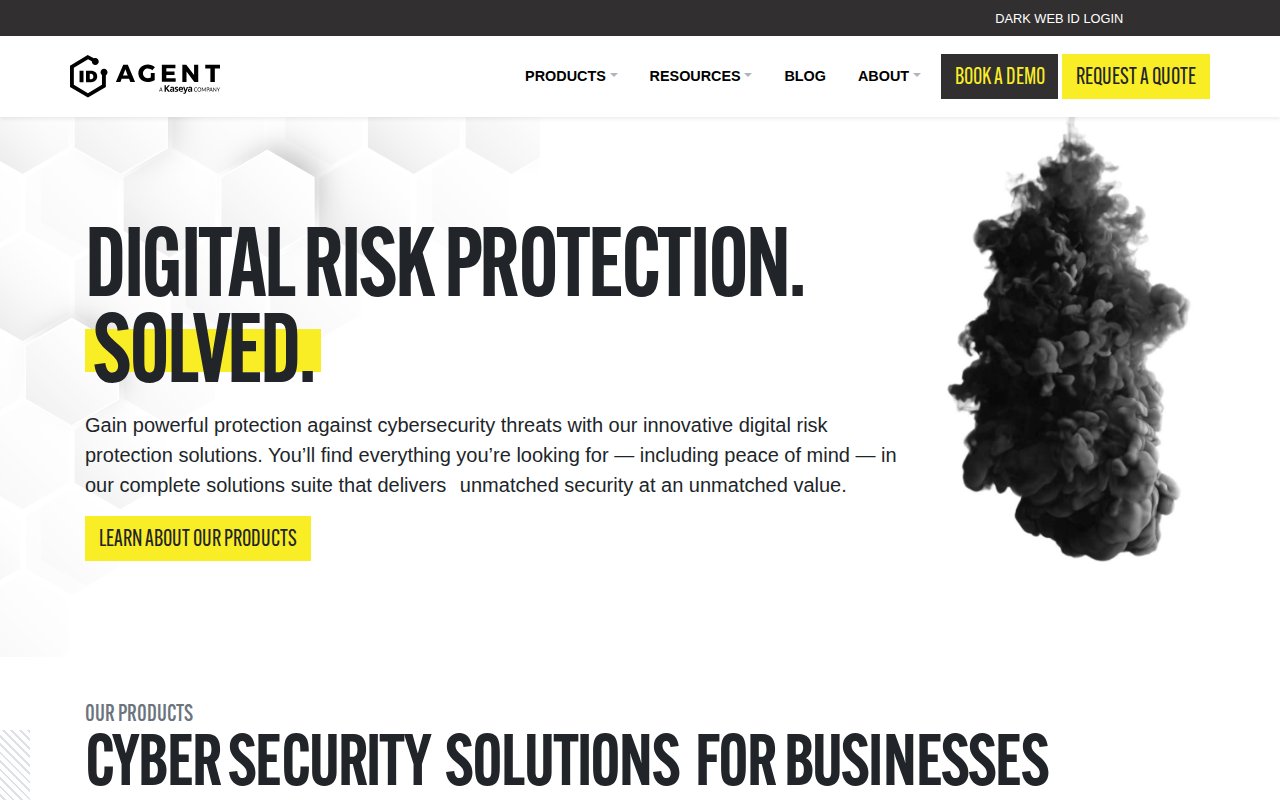
ID Agent homepage, marked a Kaseya company, headed Digital Risk Protection Solved, with Book a Demo and Request a Quote buttons
www.idagent.com, captured November 19, 2026

Kaseya Dark Web ID comes from ID Agent, a Kaseya company, and its prospect tool is Live Data Search. Kaseya's help page describes it as a prospecting feature for MSPs: after acknowledging its terms, you search a domain or email that no other partner monitors and see the latest 100 records from the past 24 months, with passwords cut to four characters. Full passwords appear once you track the domain as a client.

The help site says ID Agent adds no breach "unless we have validated it at least twice". Plan the ticketing: each new compromise opens its own ticket, and the organization name must match the PSA company exactly. Price is by quote; the 50-license minimum applies to new Kaseya 365 User purchases, not to Dark Web ID alone.

Best fit:MSPs on Autotask, ConnectWise or Kaseya BMS that want a masked prospect search and a ticket for each new compromise.

Think twice if:You are onboarding clients with years of old exposures and want PSA tickets from day one, because Kaseya's help site says an initial scan that finds 1,000 compromises opens 1,000 tickets and suggests waiting 24 to 48 hours before switching ticketing on; departed users stay in the feed until you turn on active user filtering.
02

InsecureWeb

A multi-service security console paid for in shared credits, with a prospect scan, an organization per client and scheduled client reports.

Published credit plansScan a prospectWhite label
Prospecting
Scan a prospect runs a live search on any domain for a short report; each search costs "a fraction of a credit"; passwords stay masked until the account is verified and on a paid plan
Monitoring
domains, employee emails, IP addresses, usernames and phone numbers; each client its own organization with a scan schedule
Published pricing
Starter $260 a month billed annually or $288.89 month to month for 1,000 credits; Professional $490 or $544.44; Enterprise $990 or $1,100; pay as you go from $20
Client reports
PDF and comma-separated values (CSV), weekly or monthly per client; view-only client sign-in; white label through your own domain
Integrations
no PSA named on the pages we read; webhooks to ticketing tools and an application programming interface (API)
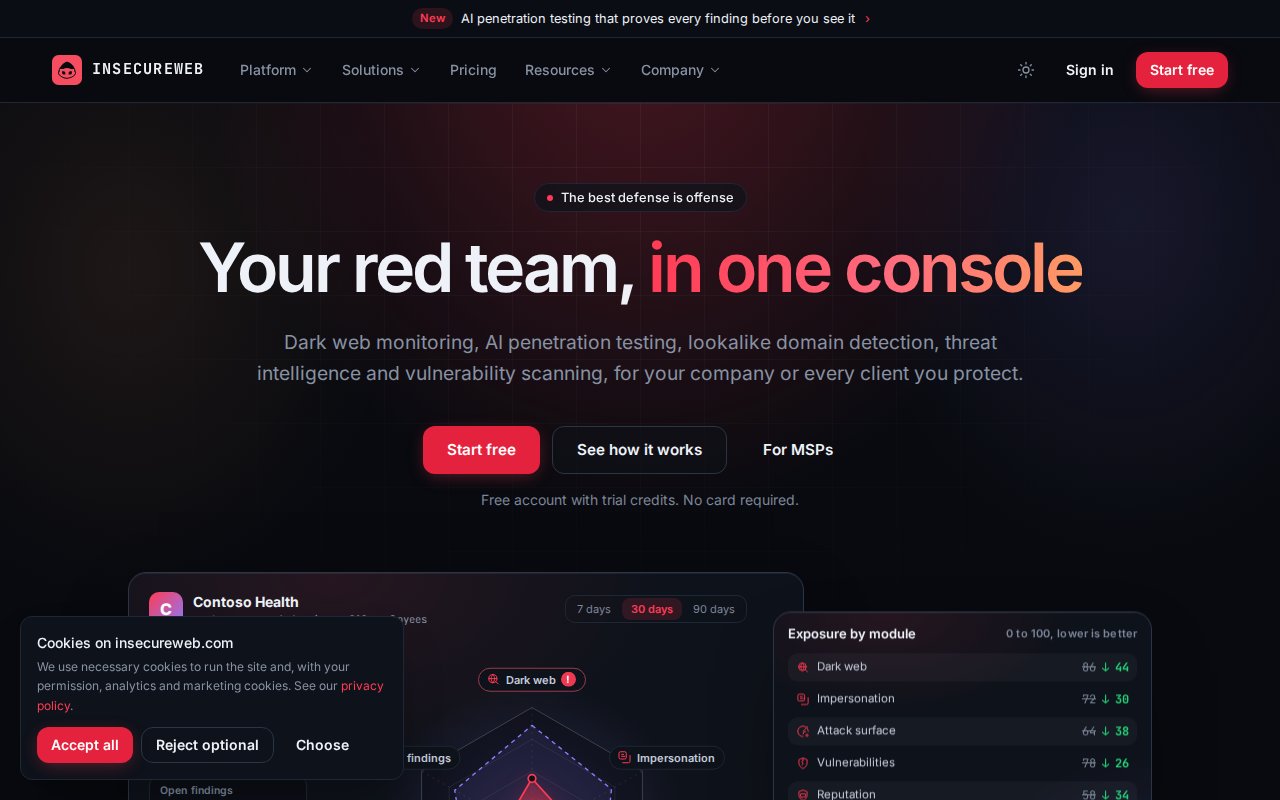
InsecureWeb homepage headed Your red team, in one console, listing dark web monitoring among its services
insecureweb.com, captured November 19, 2026

InsecureWeb sells dark web monitoring as one service in a console that also covers lookalike domains, threat intelligence and vulnerability scanning, all paid for in shared credits. Its pricing page shows what one service could cover if credits went to nothing else: 83 dark web entities on Starter, an entity being a domain, IP address, email, phone number or username. A domain entity covers every address on it, and each prospect search costs "a fraction of a credit".

Each client gets an organization with its own assets, scan schedule, reports and mitigation queue, plus a view-only login for the client. Named sources include stealer logs, Telegram channels and paste sites. No PSA is named; alerts reach ticketing tools through webhooks. No security certification is listed on the pages we read.

Best fit:MSPs that want a published price, per-client reports and prospect searches drawn from one pool of credits.

Think twice if:You need to forecast cost per client, because credits are shared across services and InsecureWeb publishes no exact credit cost for a monitored domain.

03

CyberGuard360

A white-label security and compliance platform for MSPs, with free prospect scans and published plan prices.

Free prospect scansPer-client plansSession cookies named
Prospecting
white-labeled dark web prospect scans, 5 a month on the free Spark plan, 25 on Launchpad, 50 on Essential and 100 on Professional
Monitoring
breach dumps, infostealer logs, credentials tied to protected domains and stolen session cookies; alerts to you or the client, white-labeled
Published pricing
Launchpad $79 a month billed annually ($99 billed monthly), with 25 end-user licenses and monitoring as an add-on at a price not stated; Essential $299 and Professional $399 a month billed annually ($399 and $599 billed monthly)
Billing
Essential and Professional are per client, with the first client of up to 25 users included; extra client license price not published; no contracts or minimums
Integrations
no PSA named on the pages we read
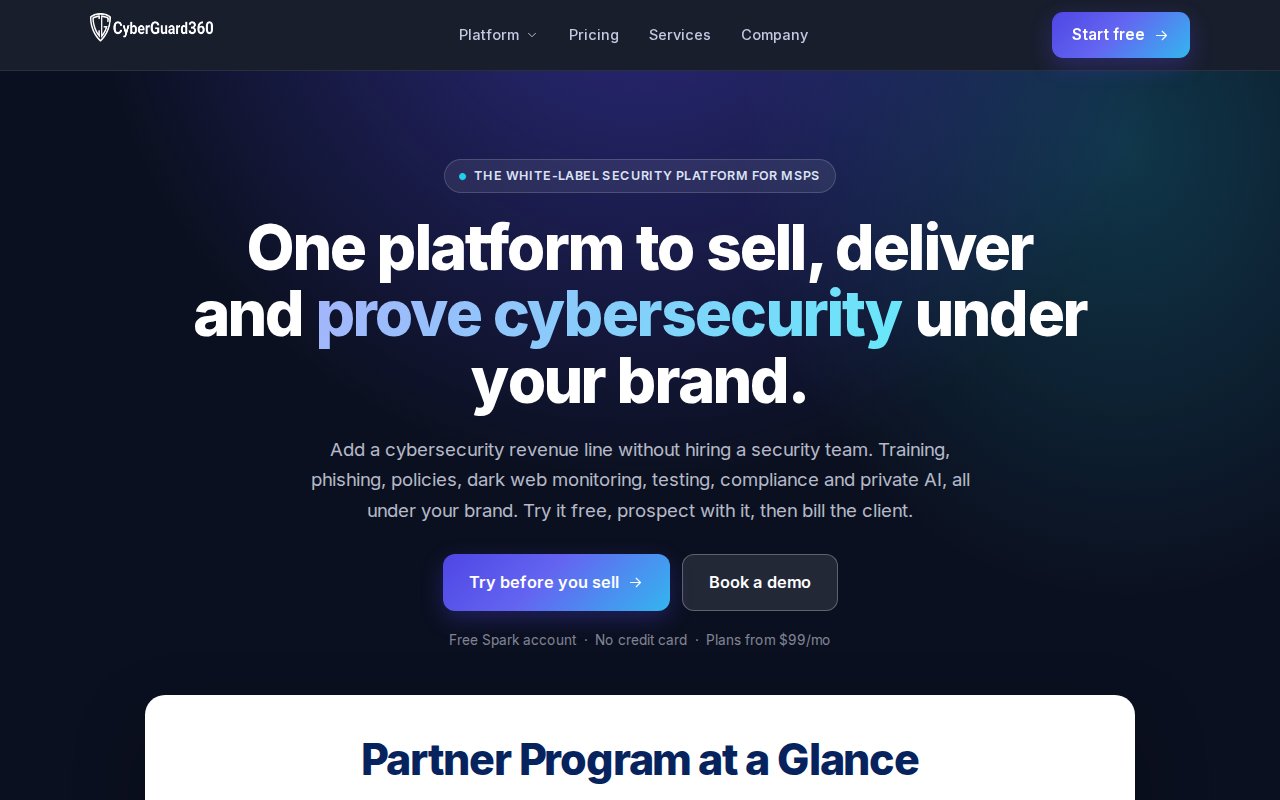
CyberGuard360 homepage headed One platform to sell, deliver and prove cybersecurity under your brand
cyberguard360.com, captured November 19, 2026

CyberGuard360 is a white-label security and compliance platform for MSPs, and dark web monitoring is one of its modules. Its platform page names breach dumps, infostealer logs and stolen session cookies, and sends alerts to you or straight to the client under your brand. It does not say how often it checks.

Its pricing page sets prospect scans by plan: five a month on the free Spark account, rising to 100 on Professional, though Spark includes no monitoring. How much detail a scan shows is not described. Essential and Professional bill per client, with the first client of up to 25 users included; the price of each further client license is not on the pages we read. Monthly billing lifts Essential from $299 to $399 a month.

Best fit:MSPs that want to run prospect scans for free before buying, then deliver monitoring under their own brand.

Think twice if:You need a 30-client total before the sales call, because CyberGuard360 does not publish the price of each extra client license, and Launchpad is limited to MSPs under $650,000 in revenue.

04

Have I Been Pwned

Troy Hunt's breach notification service, whose Pro plans monitor customer domains once you prove you control them.

Monitoring onlyPriced by domain countStealer logs on Pro
Monitoring
email addresses on verified domains, from breach data, plus stealer logs on Pro
Published pricing
Pro 1 $379 a month effective, billed $4,548 a year upfront, for 50 domains; Pro 5 lists $4,599 a month for 800; no currency code on the pricing page, and its terms put amounts in US dollars unless specified
Domain cap
only domains with more than 10 breached addresses count toward it
Prospecting
its terms allow a third party's domain on a plan that permits it once the owner's authorization is verified, allow unverified searches only under an Enterprise agreement, and bar queries that could be construed as solicitation
MSP delivery
no MSP console, PSA integration or client reports listed on the pages we read; its terms require visible attribution with a link on results shown to others; domains added in the dashboard, by API or by CSV upload
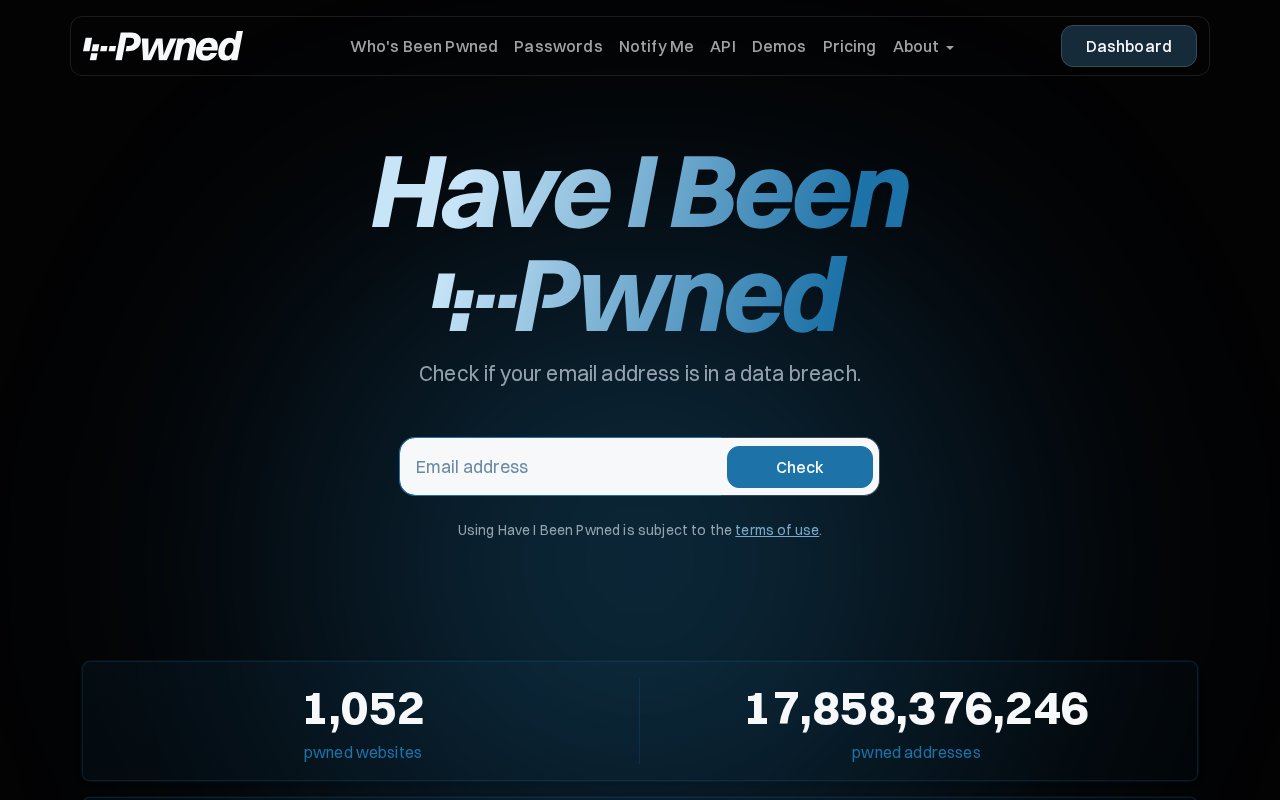
Have I Been Pwned homepage with its Check if your email address is in a data breach search box
haveibeenpwned.com, captured November 19, 2026

Have I Been Pwned is the breach notification service Troy Hunt has run independently since 2013, and its Pro plans add customer domain monitoring for MSPs. Its terms of use do not permit searching, monitoring or reporting on a domain for a third party unless a paid plan expressly allows it. On its public plans, the owner must authorize you through its verification, so a cold prospect scan is outside its terms.

Pro 1 costs $379 a month, billed as $4,548 a year upfront, for 50 domains, and only domains with more than 10 breached addresses count toward the cap. Prices show "$" without a currency code; bank transfers are invoiced in Australian dollars.

Best fit:MSPs that need to monitor client domains they can prove they control, at a published price.

Think twice if:You want to scan prospects or send clients branded reports, because Have I Been Pwned's terms need each domain owner's verified authorization and visible attribution on results you share, and we found no MSP console or client reports.

Dark web monitoring inside a wider MSP security platform

One feature of a per-user or per-seat platform; worth it if you want the rest.

05

Guardz

A security platform for MSPs, priced per user, whose dark web scan runs every 10 days and whose prospect report counts leaks without showing them.

Prospecting ReportScans every 10 daysSeven PSAs named
Prospecting
Prospecting Report on a prospect's domain, up to 5 on the trial, 25 on Pro monthly, 100 on Pro annual and unlimited on Ultimate; leaked credentials are counted, not shared
Monitoring
scans by company domain every 10 days; the first run covers 2 years; shows leaks under 2 years old for active, licensed users; only admins see leaked passwords
Published pricing
per user, quote only, pay per month; dark web monitoring marked on all three plans (Pro, Ultimate, Elite); 14-day free trial with no card; licenses movable across clients
Integrations
each Guardz issue opens its own ticket in ConnectWise PSA, Autotask, SuperOps, ServiceNow, HaloPSA, Syncro or NinjaOne; leaked credentials surface as one high-severity issue
Certifications
System and Organization Controls (SOC) 2 Type II, per its trust page
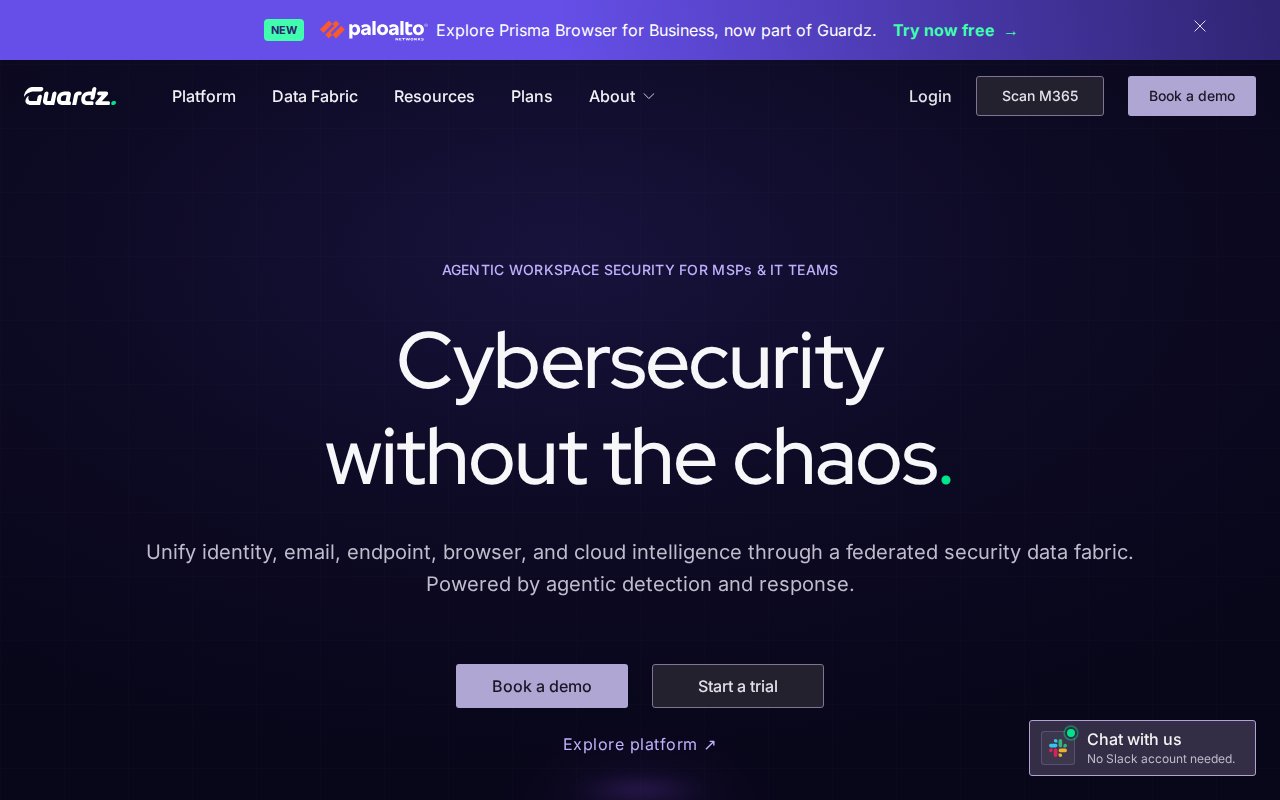
Guardz homepage headed Cybersecurity without the chaos, with Book a demo and Start a trial buttons
guardz.com, captured November 19, 2026

Guardz is a security platform for MSPs sold per user, and dark web monitoring is one of its scans. Its help center says the scan "currently runs automatically every 10 days", the first run reaches back two years, and only leaks under two years old tied to active, licensed users appear.

The Prospecting Report runs on a prospect's domain. It counts leaked email and password pairs as findings, but in Guardz's words "the Compromised credentials will not be shared"; details come after the lead starts a trial, and Guardz recommends telling the prospect before you run it. Its help center says all leaked credentials land in one issue, and each issue becomes a ticket in seven PSAs. Its pricing grid marks dark web monitoring as included on Pro, Ultimate and Elite.

Best fit:MSPs that want dark web findings, prospect reports and other client security issues in one per-user platform.

Think twice if:You need checks more often than every 10 days or a standalone dark web price, because Guardz's help center documents a 10-day scan cycle and we found no standalone dark web purchase on its pricing page.

06

usecure uBreach

The breach monitoring module of usecure's human risk platform, with weekly scans and prospecting scans on both tiers and whole-domain monitoring on uBreach Pro.

Weekly scansProspecting scansNo minimum licenses
Monitoring
automatic weekly scans of user email accounts; uBreach Pro adds whole domains, including users not added to the platform, breach alerts and redacted views of leaked data
Prospecting
prospecting scans create branded breach reports on external domains, marked on both uBreach and uBreach Pro; no limit published
Published pricing
per user per month, quote only; no minimum licenses and no long-term commitment; uBreach Pro priced by the number of domains monitored
Integrations
its help center says new breaches open tickets in ConnectWise, Autotask, HaloPSA and NinjaOne when uBreach Pro is enabled
Certifications
SOC 2 and International Organization for Standardization (ISO) 27001, listed on its trust center
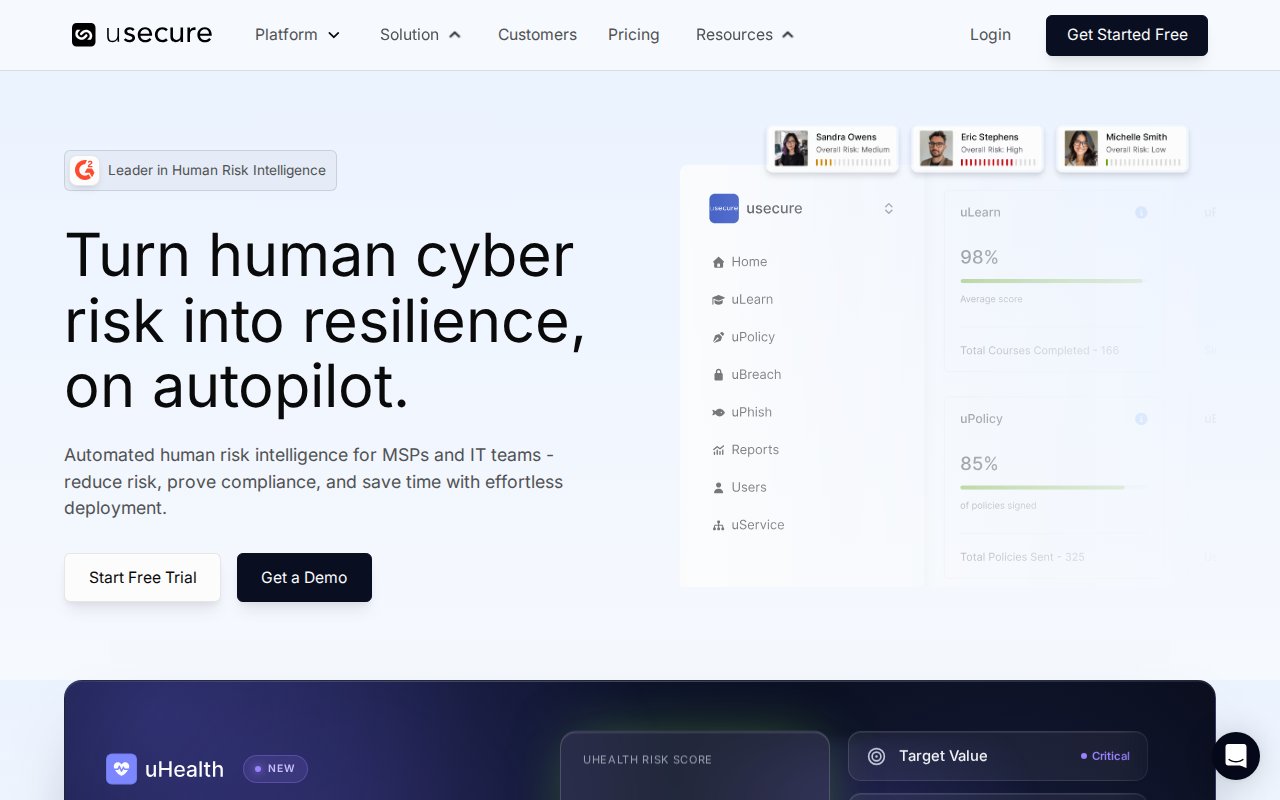
usecure homepage headed Turn human cyber risk into resilience, on autopilot, with uBreach in its product menu
usecure.io, captured November 19, 2026

usecure uBreach is the breach monitoring part of usecure's human risk platform, beside its training and phishing modules. It runs "automatic weekly scans" of user accounts across data dumps, paste sites and hacking forums. Alerts to admins and, optionally, the affected user come with uBreach Pro, as do redacted snippets of leaked data.

The base tier watches individual email accounts; uBreach Pro monitors whole domains, including people never added to the platform. Both tiers list prospecting scans that produce branded breach reports on external domains. All clients sit in one dashboard; Pro adds advanced reports by user, domain or incident status. A not-for-resale (NFR) license covers internal or demo use, not clients. Pricing is per user per month on request, with no minimum licenses; uBreach Pro is priced by domains monitored.

Best fit:MSPs that sell usecure's training and phishing modules and want breach monitoring and prospect scans in the same dashboard.

Think twice if:You want breach alerts, PSA breach tickets or whole-domain monitoring without uBreach Pro, because usecure ties all three to that upgrade, priced by domains monitored.

07

Breach Secure Now

A channel-only training and compliance platform where dark web monitoring of business and personal credentials is one feature.

Training-led remediationMonth-to-month30-day trial
Monitoring
business and personal account credentials, with alerts when exposed credentials are detected; sources and check frequency not published on the pages we read
Prospecting
its 2018 materials describe a dark web assessment for clients or prospects; the current product page lists none
Published pricing
per seat through a sales rep, quote only; month-to-month; 30-day free trial with no card and "No functional limits"
Client reporting
breach counts per employee sync into a client portal tool
Certifications
SOC 2 Type 2 and SOC 3, per its trust center
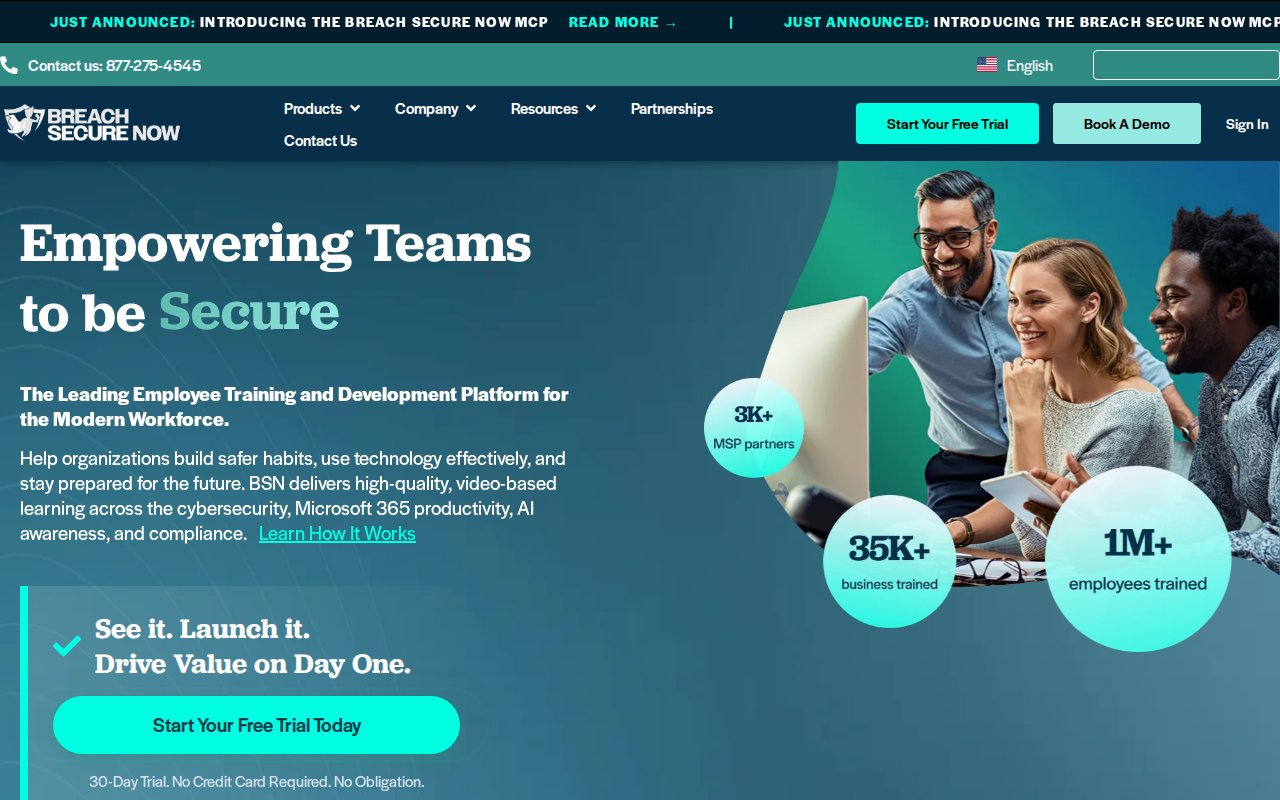
Breach Secure Now homepage headed Empowering Teams to be Secure, offering a 30-day free trial
breachsecurenow.com, captured November 19, 2026

Breach Secure Now is an employee training and compliance platform sold only through the channel, with dark web monitoring among its features. Its cybersecurity page describes alerts when exposed business or personal credentials are detected, and remediation runs through training: employees learn to update passwords and turn on MFA.

The rest is thinner. Sources, check frequency and limits are not on the pages we read. Its 2018 posts describe a Dark Web Breach Assessment for clients or prospects; the current product page lists no prospect scan. An August 2026 integration syncs breach counts and each employee's latest breach date into a client portal tool. Pricing is per seat, month-to-month, through a rep.

Best fit:MSPs already selling Breach Secure Now training who want credential alerts tied to employee lessons on passwords and MFA.

Think twice if:You need to know sources, check frequency or prospect-scan terms before you sign, because Breach Secure Now does not publish them on the pages we read.

Threat intelligence depth for MSPs with security staff

A multi-tenant platform for teams that will work infostealer and session data.

08

Flare

A threat exposure platform with a multi-tenant console for managed security service providers (MSSPs), covering infostealer logs, session cookies and API keys.

Session cookies and tokensMulti-tenant consoleDomain authorization
Monitoring
employee and contractor credentials, session cookies, API keys and other tokens, lookalike domains and mentions of the company or its executives
Data sources
infostealer logs and stealer log markets, Telegram channels and groups, Russian and English forums, ransomware leak sites and paste sites
Prospecting
identity exposure assessments as proof-of-value work with prospects; domain-specific credentials need a domain authorization request first
Delivery
multi-tenant console with a Portfolio view; white-label reporting and alerts; automated revocation through Entra ID and Okta
Published pricing
tenant-based licensing with volume discounts, quote only; free trial; SOC 2 Type II, per its trust page
Flare homepage headed Stop AI-Accelerated Attacks Before They Become Breaches, with demo and free trial buttons
flare.io, captured November 19, 2026

Flare is a threat exposure platform with a program for MSSPs, and its console holds each client as a separate tenant, with a Portfolio view across them. Its named sources include infostealer logs and stealer log markets, Telegram, forums and ransomware leak sites, and it watches session cookies and API keys as well as passwords. Its Identity Exposure Management revokes access automatically through Entra ID and Okta.

For prospects, Flare offers identity exposure assessments as proof-of-value engagements, but its documentation says domain-specific credentials and personal data need a domain authorization request first. Licensing is per tenant with volume discounts, by quote, with a free trial. Flare's MSSP page claims "real-time" monitoring without a stated cycle. It suits teams with analysts to work those findings.

Best fit:MSPs with security staff who will act on infostealer, session cookie and token exposures across many client tenants.

Think twice if:You want alerts on your PSA board, because Flare's integrations name Jira and ServiceNow but no PSA.

also considered

Also considered

  • Breachsense: API-first, with all client domains in one account; you build client portals on its API.
  • SpyCloud: minimum participation in its program for MSSPs is $10,000 a month.
  • Cybersixgill: now part of Bitsight; its earlier MSSP terms gave clients no direct data access.
  • Keeper BreachWatch: checks passwords saved in Keeper vaults against breach data; no domain monitoring listed.
  • DarkWebSonar: one workspace for all domains, without client tenants or pre-built PSA connectors.
decision aid

Prospecting or ongoing monitoring: what each tool does

A prospect scan is a snapshot of one domain on one day; monitoring is a schedule for signed clients. "Not found" means not on the pages we read.

Prospecting a company you do not serve yet, read November 19, 2026
ToolScan a domain you do not servePublished limitWhat the prospect sees
Kaseya Dark Web IDYes, after a terms acknowledgment; domains another partner monitors are blockedLatest 100 records from 24 months per search; a counted search allowance, size not publishedPasswords masked to four characters; branded PDF or CSV export
InsecureWebYes, paid in creditsA fraction of a credit per search; no cap statedEvery leaked record at the domain; passwords masked until the account is verified and paid
CyberGuard360Yes5 a month free; 25, 50 or 100 on paid plansCredential exposure, detail not described; white-labeled
Have I Been PwnedNot without the owner's verified authorization on public plans, per its termsNot applicableNot applicable
GuardzYes; Guardz advises telling the prospect first5 on trial; 25 or 100 on Pro; unlimited on UltimateFindings counted with original leak dates, credentials not shared; your logo
usecure uBreachYes, on uBreach and uBreach ProNo limit publishedBranded breach report; contents not described
Breach Secure NowNot on the current product page; described in 2018Not found2018: partner chose how much of each password to redact
FlareProof-of-value assessmentsNo limit publishedCompromised credentials, session cookies, misconfigured infrastructure, leaked source code; domain credentials need authorization
Monitoring signed clients, read November 19, 2026
ToolWhat is monitoredHow oftenPer-client console and reportsPSA tickets
Kaseya Dark Web IDDomains, emails, IP addresses24/7 claimed, no cycle stated; 24 to 48 hours for a new domainOrganization per client; reports take up to 4 daysAutotask, ConnectWise, Kaseya BMS
InsecureWebDomains, emails, IP addresses, usernames, phone numbersPer-client schedule; "continuously" claimed, no cycle statedOrganization per client; weekly or monthly PDF and CSVNone named; webhooks
CyberGuard360Domain credentials, dumps, infostealer logs, session cookiesNot foundModules per client; white-labeled alertsNot found
Have I Been PwnedEmails on verified domains; breach data and stealer logsNot statedNo MSP console or client reports foundNot found
GuardzCredentials by company domain, under 2 years old, licensed usersEvery 10 daysMulti-client view; client-ready reportsSeven PSAs; one ticket per issue; leaks grouped in one issue
usecure uBreachUser email accounts; whole domains on ProWeeklyOne dashboard; user and company reports; advanced reports on ProFour PSAs; breach tickets need uBreach Pro
Breach Secure NowBusiness and personal credentials"Real-time" claimed; no cycle statedManagement dashboard; counts in a client portal toolNot found
FlareCredentials, session cookies, tokens, API keys24/7 claimed; no cycle statedMulti-tenant console; white-label reportsNone named

What the tables show:

  • Six of the eight document a prospect scan; Breach Secure Now's evidence dates from 2018, and Have I Been Pwned's terms need the owner's authorization.
  • Three publish a prospect limit (CyberGuard360 and Guardz by plan, Dark Web ID per search), and two state a check cycle (Guardz every 10 days, usecure weekly).
  • Dark Web ID documents one ticket per compromise in three PSAs, Guardz one per issue in seven, and usecure breach tickets in four with uBreach Pro.

Have I Been Pwned's terms require the owner's verified authorization and bar queries construed as solicitation. Dark Web ID asks you to acknowledge its terms before each search, Guardz recommends telling the prospect first, and Flare withholds domain credentials until authorized. Read your vendor's terms before you scan a prospect.

how to choose

How to choose dark web monitoring for your clients

  1. Job: prospecting, monitoring or both; a clean prospect scan says nothing about next month.
  2. Billing unit: domains, credits, client licenses, users or tenants; map each to your client mix.
  3. Sources: an old breach dump may hold a long-changed password; a fresh infostealer log can carry a session cookie that skips the password and the MFA prompt. Dark Web ID, CyberGuard360 and Flare name cookies.
  4. Delivery: ask for an organization per client, client logins or scheduled reports, and white label.
  5. Tickets: Dark Web ID opens one per compromise, so Kaseya suggests turning ticketing on after the first 24 to 48 hours. Guardz groups leaks into one issue; usecure needs uBreach Pro.
  6. Bundle: if you already sell one of the security awareness training platforms for MSPs, check whether its monitoring covers you before adding a tool.

When an alert fires:

  1. Check the breach date, whether a password is present and whether the user still works there; Dark Web ID keeps departed users unless active user filtering is on.
  2. Reset the password and enforce MFA.
  3. For a stealer log or cookie hit, also revoke sessions and tokens; Flare automates this.
  4. Check the user's password manager for reuse; see our comparison of password managers for MSPs.
  5. Agree in advance who tells the client.

On the demo, ask how often they check, which alerts open a PSA ticket and what each extra client costs.

Red flags

  • A prospect report showing full passwords to a company you do not serve.
  • A "real-time" claim with no stated check cycle.
  • A PSA integration that skips dark web findings.
pricing

What dark web monitoring costs for 30 clients

Thirty clients, one domain and about 15 users each (450 users), at list price billed annually.

Published list prices for 30 clients and 450 users, read November 19, 2026
Tool and planBilling unitCost for 30 clientsPer client a year
Have I Been Pwned Pro 1Plan by domain count$4,548 a year$151.60
InsecureWeb Starter, annualCredits$3,120 a year ($3,466.68 month to month)$104
CyberGuard360 Essential, annualPer clientAt least $3,588 a year ($4,788 billed monthly), plus 29 client licenses at a price not publishedNot calculable
Kaseya Dark Web IDNot publishedQuote onlyQuote only
GuardzPer userQuote only, for 450 usersQuote only
usecure uBreachPer user; uBreach Pro by domainsQuote only, for 450 users plus 30 domains on ProQuote only
Breach Secure NowPer seatQuote only, for 450 seatsQuote only
FlarePer tenantQuote only, for 30 tenantsQuote only

Have I Been Pwned: 30 domains fit the 50-domain cap; "$" shown without a currency code. InsecureWeb: $260 x 12; Starter covers 83 dark web entities if credits go to nothing else. CyberGuard360: $299 x 12 ($399 x 12 billed monthly) for the first client of up to 25 users.

List prices are not partner quotes, and the three priced tools bill on different units and do different jobs, so none of them wins on price. Have I Been Pwned's figure buys monitoring without prospecting, and we found no client console. If you resell the service, what a per-user MSP price covers shows where dark web monitoring sits in a client's price.

faq

Frequently asked questions

Is dark web monitoring worth it for MSP clients, or is it a scare tactic?

It reports credentials already exposed, so it is worth what your response is worth: a reset, MFA and revoked sessions. It does not stop a breach by itself. Guardz shows leaks under two years old for active, licensed users; Dark Web ID says it validates each breach at least twice.

How much does dark web monitoring cost for an MSP?

At list price for 30 clients, Have I Been Pwned Pro 1 is $4,548 a year, InsecureWeb Starter $3,120 billed annually, and CyberGuard360 Essential at least $3,588, with the extra client license price not published. The other five quote only. Units differ, so compare cost per client.

How should an MSP handle a dark web alert?

Check the breach date and whether a password is present, and drop users who have left. Reset the password and enforce MFA. For an infostealer or session cookie hit, revoke the user's sessions and tokens too. Log the ticket against the right client and agree who tells them.

Is it legal to scan a prospect's domain?

We cannot give a legal answer, but vendor terms set limits. Have I Been Pwned requires the owner's verified authorization and bars queries that could be construed as solicitation. Dark Web ID asks for a terms acknowledgment before each search, Guardz recommends telling the prospect first, and Flare withholds domain credentials until authorized. Read your vendor's terms.

What does a free dark web scan show compared with paid monitoring?

A snapshot with detail held back. Breachsense's free scan returns two counts, and CyberGuard360's free Spark plan gives five prospect scans a month without monitoring. Built-in prospect tools hold back too: Dark Web ID shows four password characters and Guardz counts findings without credentials. Monitoring adds a schedule, alerts and, on Dark Web ID, full passwords for tracked domains.

Is a hit from an old breach or a fresh infostealer log, and does it matter?

It changes the fix. An old dump may hold a password changed long ago. An infostealer log can include a session cookie that works without the password or MFA, so revoke sessions as well as resetting. Dark Web ID's record types include Data Dump, Combolist and Malware, its infostealer type.

Screenshots captured from each vendor's live site on November 19, 2026.