TLDR
- Who: NUOPTIMA, running a free, education-first SEO Accelerator to create inbound demand for our own agency.
- What changed: A four-week cohort webinar taught decision-makers how SEO actually works, then let qualified buyers come to us instead of us chasing them.
- The number: 568 attendees, £90k in closed contract value, and £200k in pipeline, all inbound.
The challenge: good leads were too rare
Generating leads for an agency on demand is hard, especially for the type of clients we like working with.
We sell an £18k to £45k contract (£3.5k to £7.5k per month for a minimum of six months), so qualified leads are not easy to find. The best ones came from brands that already knew what they wanted and were actively searching for SEO help. We also had strong leads come through referrals from our network.
Here is the thing. Most of these leads already had two things going for them. They either knew who we were, or they understood the value of SEO and were seeking support from an agency like us.
We had to think about this realistically. What was holding us back from signing client after client? Given the results we had achieved for our clients, we trusted our SEO service was doing what we knew it could. Our close rate is 30% on proposals, so we hypothesized the real issue was getting people to knock on our door in the first place.
What Limitations Were We Facing?
We knew that outbound prospecting for SEO is very hard. A lot has to be right, timing-wise, for a business to consider SEO as a growth channel. So it is important we position ourselves as the obvious choice for when they are ready.
That highlights a clear limitation on our growth. Our ability to scale was tied to our brand awareness.
We have plenty of drip-feed strategies for this, like attending events and running workshops, but that is a long-term approach. We wanted a quick catalyst to get a batch of new leads through the door.
We needed to get crystal clear on what was stopping businesses from coming to us rather than us reaching out to them. Through our efforts to onboard brands, we realized many of them had one thing in common. The decision-makers (CEOs, CMOs, and marketing leads) did not fully grasp the true value of SEO work.
Education and SEO awareness are central to attracting new clients, which pointed to another pain point in our strategy. So what else did we identify?
- SEO is expensive and is perceived as a "spammy" word, which fundamentally means people do not truly understand it.
- Over 60% of people, when asked, believe SEO takes three to six months to generate results (which is true for new sites), so businesses have to be confident about investing upfront. Many do not know how to tell whether their SEO is working until months later, potentially costing them thousands.
These are just some of the things that could stop leads from getting through our door quickly. So here is what we did.
We decided a webinar series would let us speak to hundreds of people at once, raise their awareness of us, and show our authority in the space. It gave us a chance to teach the right way to think about SEO and to create our own category.
Who we were targeting
The SEO Accelerator was built for the decision-makers who controlled whether a business ever considered SEO as a growth channel, not for SEO practitioners themselves. Every landing page, session topic, and growth channel choice was built around reaching that buyer.
- CEOs, CMOs, and marketing leads: the people who did not fully grasp the value of SEO and needed education before they would invest in it, the core audience the four-week curriculum was built to convert.
- Investors, VCs, and founders: a wider ICP layered on top of marketing leads, since these buyers often make or influence the growth-spend decision at portfolio companies.
- An audience that lived on LinkedIn: the growth channel mix (organic LinkedIn posting, personal profiles, partnerships) was built around where this ICP already spent their time, rather than a generic multi-channel blast.
What we did: a cohort-based SEO Accelerator
We built a cohort-based program that gave away our internal strategies and educated decision-makers on why SEO matters. We showed the types of results they could achieve, how to run a top 1% SEO strategy, and how to read leading indicators to communicate probable ROI.
The core idea was to educate investors, marketers, VCs, and founders about SEO, its potential, and how to predict ROI. We made it a four-week cohort-based course. Four weeks gave us as much exposure to our ICP as possible while covering the core topics in enough detail.
We view SEO as having four pillars, so we chose four topics across four sessions: Strategy, Backlinks, Content, and Technical. Within these, we covered:
- How to plan, model, and execute an expert SEO strategy
- Core content lessons, including how to structure SEO pieces, do keyword research, and rank in position #1
- Demystifying technical SEO and helping brands understand when to invest and how to communicate priorities to their tech team
- Everything they need to know about securing backlinks through link building, how to use them, and when they are useful
After landing on the idea, we gave ourselves a three-week deadline to sort out the logistics, since the webinar was not our only priority. Alongside building and marketing this program, we still had to run the business and service existing clients. After the three-week setup, we had four weeks to market the event.
Setting up a high-converting landing page
In those first few weeks, the main goal was a landing page to collect leads and tease attendees about what was coming. It needed a killer headline and plenty of social proof, so we turned to our market research to guide us.
From our sales calls, we knew people cared about having ample traffic and that SEO was top of mind because of rising CACs on Facebook. It was clear we could highlight SEO's cost-effectiveness and show how it saves money across the board.
We wrote the headline, "Learn How To Increase Your Site's Organic Traffic by 20k & Cut Your CACs Permanently".
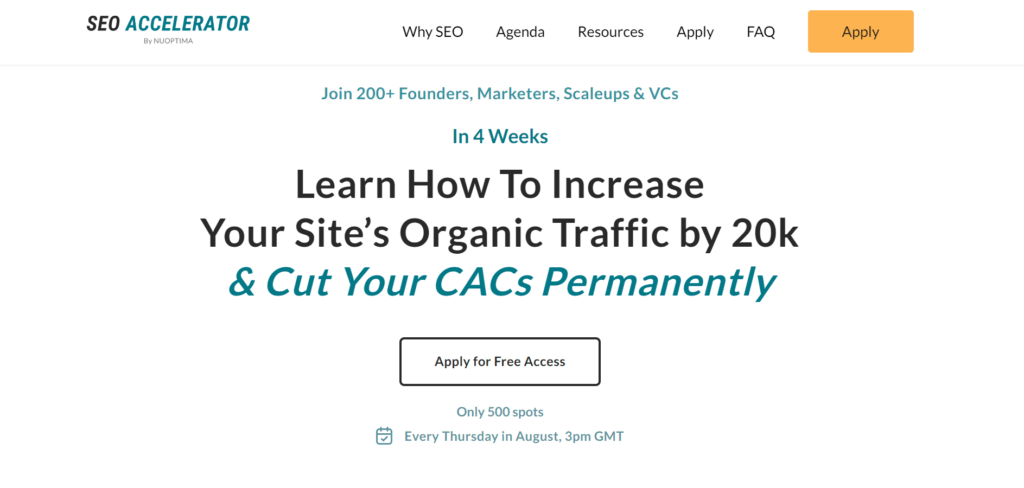
We could have gone with 100k or 50k as the enticing figure, but we had an exact case study that took a website from 0 to 20k, which made it more believable. Even if we had a site that hit 100k in organic traffic, it would seem far-fetched. Our buyers are sophisticated and do not fall for crazy stats.
Nailing this landing page was crucial to getting businesses interested, so every line had to be captivating enough to pull the reader into the next.
Using social proof to showcase our leadership in this category
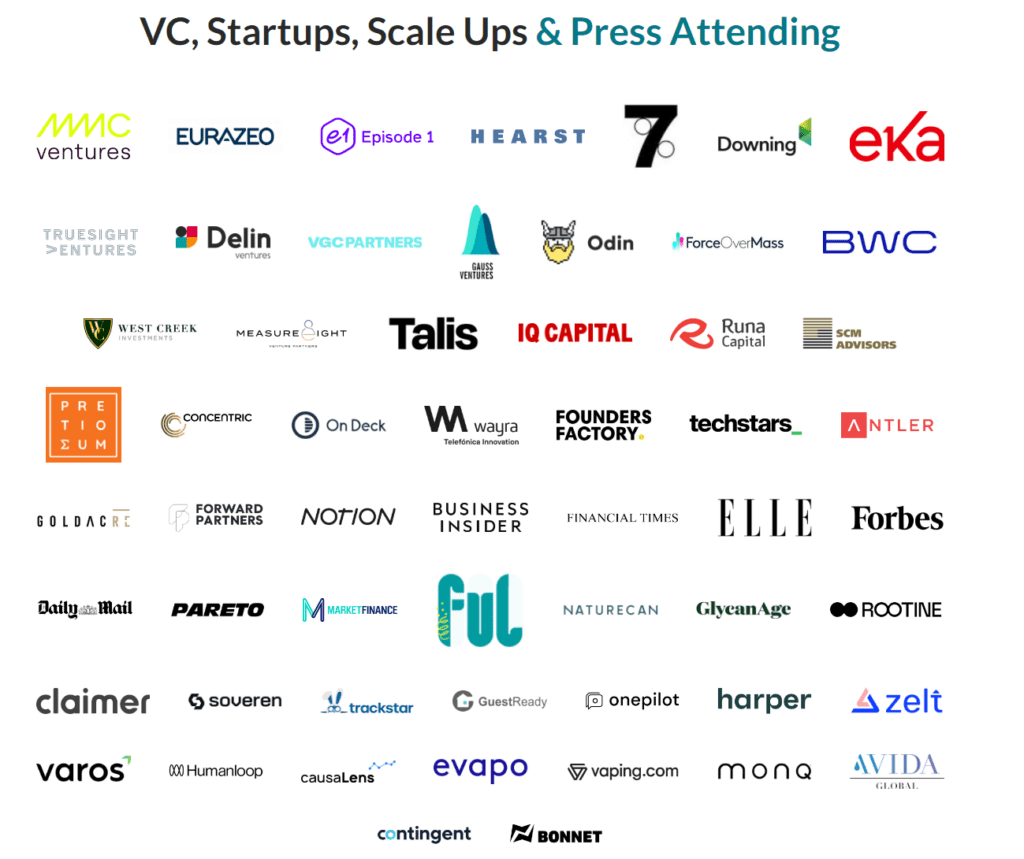
Next we focused on stacking up as much social proof as possible. We reached out to our network and any companies we had done SEO for, written proposals for, or given free SEO advice.
We are good at what we do, so testimonials came flying in, and many companies were happy for us to use their logos. We built a wall of logos and used each relationship as a teaser to get more.
This extra layer of proof showed people who did not know us that we were worth their time and attention. It also created a sense of demand and solidified our expertise.
Creating a strong sign-up process
Building a sign-up process that converted was a crucial step, and it took about a week to work out. Knowing about the success of Harry's referral mechanism, we knew we wanted a referral loop.
For context, Harry's captured more than 15,000 emails on day one of their campaign. By the end of the week they had reached an astounding 100,000 emails. Their launch relied on email capture, with the referral system at the heart of it. For every friend referred, people received a free product, and gamification kept them going as they tried to earn more. They added a visual tracker for each player's progress, and by the end of the campaign referrals accounted for 77% of total sign-ups, which was 65,000 people. That is how powerful a good referral system can be, which is why it was crucial to our own sign-up process.
The team did not want price to be an objection, so we made the webinar free and more accessible. Our goal was reach, not front-end revenue. To keep the value high, we used the words "apply for access," similar to how Reforge puts "Apply" on a $2k coaching course. Given how much value we packed in, we wanted the Accelerator to feel exclusive.
Sign-up had to be smooth to maximize reach. We could have built an in-house referral tool, but the team tested plenty of referral SaaS tools to save time. The verdict? Subpar at best. Most had poor UI and were too difficult to use.
We eventually chose one that let us do something similar to Harry's, with milestone rewards. Every time a user signed up they were redirected to /refer-friend, giving them a free technical SEO audit and lifetime access to the recordings if they referred a certain number of friends.
The results were wild. 27% of all sign-ups were referrals, and here is why:
- People like to get free stuff
- More importantly, the Accelerator provided free education with strong social proof behind it. It is only natural to want to be the person telling your team to sign up.
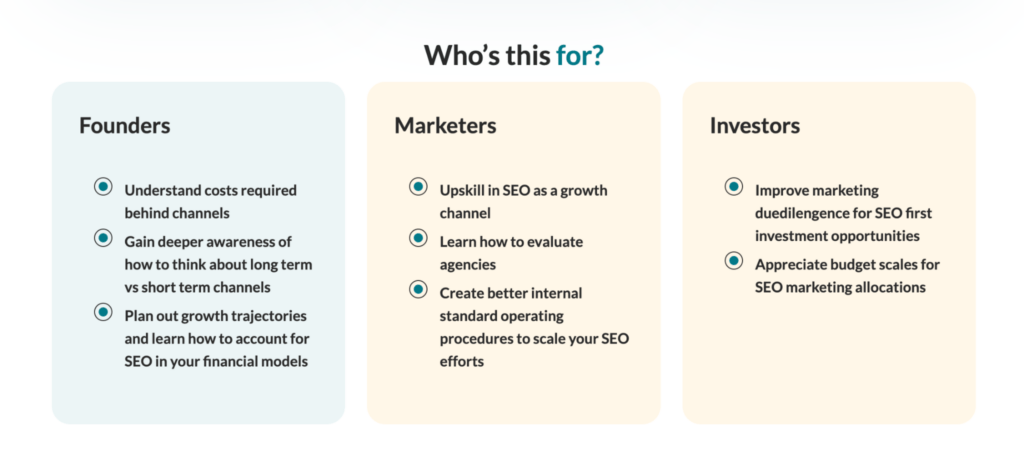
The landing page also called out personal avatars, telling readers which sessions suited which titles. If you were a CMO, you could invite a content writer to the second session. We also stated clearly how each person (investor, marketer, and founder) benefited from attending.
Deciding our most suitable growth channels
Our secondary goal during prep was to define the growth channels for acquiring attendees. We wanted the creative assets ready as soon as possible so we could push the course over the four-week marketing window with minimal delay.
We already knew our audience lived on LinkedIn, so we planned a lot of organic posting. We did not want to overspend, so we avoided LinkedIn ads, which are known to be costly.
We had never run ads on social platforms for our SEO services, so a free SEO Accelerator felt like a good way to introduce us. We decided to run on Facebook and Twitter first, then added TikTok halfway through planning.
Alongside organic LinkedIn posting and ads across other platforms, we also did the following:
- Partnerships ended up becoming an essential channel and drove strong results
- Some of our team are experienced in cold email and had inboxes already warmed up, a good chance to target key accounts
- We also tried a tool that let us DM Reddit users at scale, more on that later
With the channels set, we created static creative assets optimized for Twitter and LinkedIn.
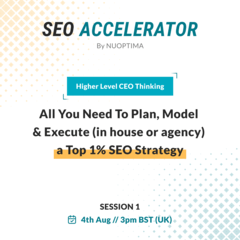
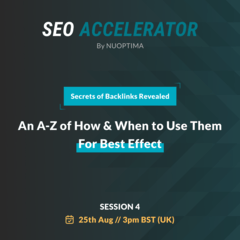
We did not have much time for Facebook Ads, so we crafted one creative with a thumb-stopping hook and a few opening-message variants. We shot it on an iPhone in about 1.5 hours, and our video team finished it with subtitles and quick animation.
So in those three weeks we planned and built like crazy, hitting our major goals:
- Spun up a landing page with plenty of social proof
- Decided on our growth channels
- Designed all the creatives we needed to execute
Marketing the SEO Accelerator in Record Time
The groundwork was set, and we had four weeks to market the event and make it a success. Here is how we executed the plan and got people excited for our sessions.
Developing a strong organic LinkedIn posting strategy
Instead of posting from a company page, we used the three personal profiles of Alexej Pikovsky, Viktor Bartak, and Aman Ghataura. Each had good rapport with their audiences, so personal profiles performed better than a company page.
The Accelerator was a company-wide effort. We used the free resources we could find on Twitter and LinkedIn to optimize a profile, then wrote a guide so the whole team could do the same.
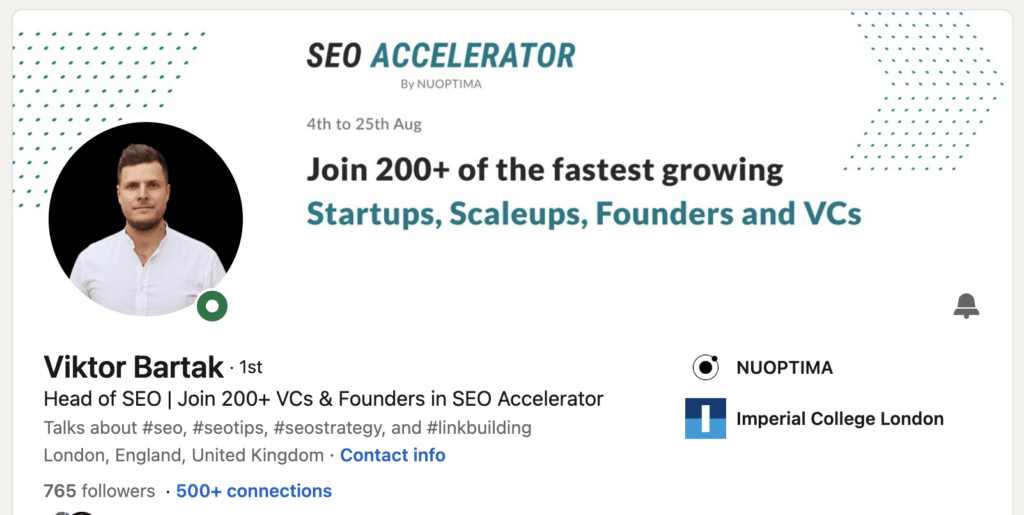
We needed a post formula that pulled readers in and converted. We analyzed the top SEO influencers to see which of their posts performed best and found clear patterns: strong hooks, big numbers, and case studies for social proof.
At first we followed a similar pattern, swapping in our own case studies. Eventually we developed a simple framework: write out every pain our ideal customer feels about doing SEO, then say what would make them curious enough to want that pain solved.
For instance, people feel real pain that writing SEO-optimized content is hard and demanding. So our post hook was "Here are the 7 changes we made to our blog pieces that helped us win Featured Snippets 34% more often".
After mapping every pain point, we wrote a post for each one, tied hooks to real case studies, backed them with supporting graphics, and posted across all our profiles over the four weeks leading up to the Accelerator. Organic LinkedIn posting generated around 25% of our sign-ups.
Testing ads on Facebook, YouTube, Twitter, and TikTok
The results from our ad strategy surprised us. We ran the same ad across Facebook, YouTube, Twitter, and TikTok over four weeks. Some worked, and others were a learning curve.
- Facebook gave us a cost per sign-up of around £12
- YouTube gave us a cost per sign-up of around £50
- TikTok did not work at all (we think the creative was wrong)
- Twitter traffic was very cheap with huge engagement, but produced a tiny number of sign-ups, which surprised us
Facebook gave the best results overall, but it was clear that ads did not move sign-ups as much as you might think.
Cold emailing decision-makers
With a lot of in-house cold email expertise, we took a specific route. We ran campaigns targeting CEOs, CMOs, and Heads of Growth at companies that had raised money from investors in the last 18 months.
In total we hit around 1,000 leads, generating around 30 direct sign-ups (excluding referrals). That is 3%, which turned out to be strong. Our book-a-call rate for a standard SEO cold email lead gen campaign was close to 0.2% last time we tested, so this ran 15x better.
The reason was that we offered free value upfront. Those 30 leads were valuable: we were targeting with spears and getting in front of 30 new accounts that were qualified buyers on budget and decision-making authority.
Reddit cold DM automation
When we decided to use Reddit's cold DM automation as a channel, we already had predictions. We are a team of growth hackers, keen to try new tools, so we knew this would be a bit of fun. We had low expectations and were not convinced it would generate real leads, but we are always up for being proved wrong.
So why invest funds and time into a potentially useless tool? The Reddit cold DM tool is something that might work today and get banned tomorrow. It does not fit the ethos of Reddit. It is a short-term hack likely to fizzle out once enough people catch on, so there was no time like the present to try it.
We paid £500 to use the tool and send 250 Reddit DMs a day. We targeted users who mentioned SEO-related keywords in chosen subreddits. We messaged 4,000 users and had a 7% reply rate. Of those, 4% or 160 were positive replies, resulting in 38 sign-ups. Honestly, this was probably our lowest quality acquisition channel.
Running partnerships
The final method was partnerships. Our marketing was working, and within a week we had passed 200 high-quality sign-ups: VC-backed founders, startups, marketers, and scaleups. A valuable audience.
We used that social proof to land partnerships with organizations we were friendly with. We offered them a chance to get in front of this audience in exchange for an email shout-out to theirs. No money changed hands.
It mattered that the companies we approached had similar audiences to ours so the benefit was mutual. These targeted partnerships pulled in around 150 additional sign-ups.
Results
During the program we never asked people to enquire or tried to sell. That was important to us. The objective was never to close revenue, it was to educate and increase awareness. With that in mind, here are the numbers we are proud of:
- 568 attendees
- £90k in closed contract value
- £200k in pipeline contract value
The best bit? This was all inbound.
Our first closed deals came from people in our network who saw the promo, realized we were an SEO agency, and reached out for a proposal. That was easy revenue, and we closed quickly.
We were also gaining reach through the LinkedIn algorithm and engagement. Our profiles were optimized, so cold buyers who happened to be looking for an SEO agency stumbled onto our profiles and booked calls inbound. Revenue closed even before the Accelerator started. Partnerships became one of our favorite channels, and something we planned to double down on.
Throughout the Accelerator, attendees booked calls on our website to learn how they could work with us. We had shown our ability without pitching or selling. We simply demonstrated our case studies, and the clients came inbound.
Key takeaways
- Education beats pitching when the buyer does not yet understand the category. Teaching decision-makers how SEO actually works turned cold audiences into inbound proposals for our B2B SEO service.
- Free value upfront changes the math on outbound. Our cold email ran at 3% sign-up, 15x better than a standard 0.2% book-a-call campaign, because we led with something worth having.
- Own your own demand engine. Referrals (27%), organic LinkedIn (25%), and partnerships (around 150 sign-ups) did the heavy lifting, not paid ads, the same compounding, owned-channel logic we build into every SEO engagement.
If you want an inbound engine that brings qualified buyers to you instead of chasing them, book a call and we will map it out.