Managed service provider (MSP) peer group buying guide

Best MSP Peer Groups for Owners and Leaders (2026)

Fifteen rooms across three genuinely different products, compared on price, format and who runs them, every claim rechecked against the group's live site on 13 November 2026.

15  groups 3  room types Rechecked 13 Nov 2026

You are the most experienced person in your own building. Every hard call, pricing, a bad hire, whether to take the acquisition meeting, ends with you, and the people you would normally ask either work for you or compete with you.

That is the problem a peer group solves. It is not training, and it is not a mastermind where a coach talks for two hours. It is a small room of owners running businesses roughly your size who will look at your numbers and tell you where you are lying to yourself.

The word covers three genuinely different products, though, and most comparison pages treat them as one. Some rooms exist to benchmark your numbers against businesses like yours. Some exist to hold you to a plan across quarterly meetings. Some are always-on communities where you ask a question at 11pm and have three answers by morning. They cost different money, they demand different time, and buying the wrong one is why so many owners say peer groups did not work for them.

This page is for owners and senior leaders of managed service providers (MSPs), from roughly $500,000 in revenue to eight figures. It is not for technicians looking for a technical forum, and it is not a list of conferences.

One thing worth knowing before you pay anyone: the attendance policy tells you more about a room than the curriculum does. I co-run a private cohort of MSP owners that meets weekly, capped at eight seats, with a red-card policy for people who stop showing up. That policy is not administration, it is the product. A group where three of eight seats are quietly empty each month is a group where nobody prepared, and you will get exactly what everyone else brought.

Where our money comes from

We do not take commissions from any group on this page, accept payment for placement, or sell access to any listed group. The private owner cohort I co-run is invitation-only and closed to applications, so it is not listed.

Comparison

MSP peer groups compared at a glance

Fifteen peer groups for MSP owners and leaders, rechecked 13 November 2026
GroupConvened byTypeVendor-runFormatPublished price
GAIN Peer Groups (Encore Strategic)Shawn Walsh, Founding PartnerBenchmarkingNoMonthly sessions, capped at 12, revenue and maturity tieredNot published
MSP Peer Groups (MSP Advisor)Dave Wilkeson, FounderBenchmarkingNoCapped at 12, one MSP per market; quarterly two-day in-person meetings with online sessions in the months between, or monthly online onlyFrom $400 per month, 12-month commitment
The Next Level (MSP Fuel)Doug Lowenthal and Howard Borochaner, co-foundersAccountabilityNoSmall-group coaching by role plus quarterly Next Level meetingsNot published
Inspire (MSPAlliance)Charles Weaver, Chief Executive Officer and co-founderAccountabilityNo12 monthly virtual plus 4 quarterly in personNot published
Peer Group Matchmaking (The Tech Tribe)Nigel Moore, FounderCommunityNoPeer group matchmaking inside the membership; accountability program in the application-only tier$59 to $79 per month
Provarro role-based groupsBrock Kuhse, Chief Executive; no facilitator namedBenchmarkingNo10 remote sessions plus 2 in-person two-day meetings a yearNot published
Producers Club (MSP Success, formerly Technology Marketing Toolkit)Robin Robins, founder of Technology Marketing ToolkitAccountabilityYes, Kaseya since July 2025Quarterly 2.5-day in person, mostly Nashville$1,997 per month
ASCII peer collaboration, now part of the Global Technology Industry Association (GTIA)Jerry Koutavas, Vice President, CommunityCommunityNoPrivate forums plus small-group and in-person meetingsIncluded in membership, $839 a year with GTIA membership
TruPeer (MSP Success, formerly TruMethods)Kaseya's MSP Success team; founder Gary Pica's final TruPeer event was in October 2026AccountabilityYes3 quarterly in person plus 1 virtual, plus accountability callsNot published
IT Nation Evolve (ConnectWise)No individual named on their siteAccountabilityYesMonthly virtual, or quarterly two-day plus monthly callsNot published
GROW Peer Groups (Marketopia)Terry Hedden, co-founderAccountabilityYesVirtual sessions, twice a month on their events page, monthly or bi-weekly on some group pages; plus three Springboards and GROWCON a year in Florida$1,999 per month for the top tier only
MSPGeekMartyn T. Keigher, Founder and President; Mendy Green, CEOCommunityNoAlways-on forums and chat, plus an annual conferenceFree, with $4.99 and $19.99 monthly tiers
GTIA member groupsMJ Shoer, Chief Community OfficerCommunityNoMember groups, regional communities, advisory councilsUS $450 a year membership dues
N-able Peer Groups (Business Transformation)Chris Massey, Head of Business TransformationBenchmarkingYesGroups of 7 to 12; 90-minute monthly online, onsite groups add two days a quarterNot published for the groups; onsites and benchmark complimentary
MSP-Ignite peer groupsSteve Alexander, FounderAccountabilityNoUp to 10 per group; monthly calls plus two 2-day in-person meetings a yearNot published; month-to-month terms

Monthly recurring revenue (MRR). Earnings before interest, taxes, depreciation and amortization (EBITDA). Non-disclosure agreement (NDA). Published facts above were read off the group's own site; type and vendor-run are our classification. "Not published" means we could not find a price on the pages we checked, not that the group has none.

Pricing

What MSP peer groups cost

Seven of the fifteen groups publish a price. Communities and associations cost tens of dollars a month; facilitated rooms with in-person meetings run from about $400 to about $2,000 a month, plus travel. The other eight do not publish a peer-group price.

Published peer group prices, lowest first, rechecked 13 November 2026
GroupPublished priceUnit and termsRoughly per year
MSPGeekFreeOptional Advocate tier at $4.99 and Enthusiast tier at $19.99 per month$0 to $240
GTIA member groupsUS $450Annual membership dues; the peer element is not priced separately$450
The Tech Tribe$59 to $79Per month, Essentials or Growth; an annual option is listed at $790; the application-only tier is not priced$708 to $948
ASCII (a GTIA community)$839Per year per company, GTIA membership included; peer groups carry no extra fee$839
MSP AdvisorFrom $400Per month, on a 12-month commitmentFrom $4,800
Producers Club$1,997Per month, or $1,897 with their marketing automation platform; invitation onlyAbout $24,000
Marketopia MSP Elite 32.6 Club$1,999Per month, top tier only, with a 100-day commitment pledgeAbout $24,000

No published price: Encore Strategic, MSP Fuel, MSPAlliance Inspire, Provarro, TruPeer, IT Nation Evolve, N-able Peer Groups and MSP-Ignite. N-able lists its executive onsites and benchmark as complimentary for partners but states no price for the groups. Outside the ranking, Pax8 quotes $350 a month on a six-month commitment for its chief operating officer group, included for eligible partners through its Voyager Alliance program. Yearly figures are our arithmetic from the published unit, before travel.

The shortlist

The 15 peer groups, room by room

Fifteen rooms across three room types. Every fact below was rechecked against the group's own live site on 13 November 2026; screenshot captions give the date each capture was taken.

01

GAIN Peer Groups, Encore Strategic

Groups capped at 12, tiered by revenue and maturity, every member under NDA

Benchmarking Independent No published price
Disclosure: Shawn Walsh is a guest on our Play It Smart podcast (season 2, episode 12, published 11 September 2026) and the player sits inside his entry. He gets the same template, the same word count and the same honest limitation as everyone else.
Convened by
Shawn Walsh, Founding Partner
Type
Benchmarking
Vendor-run
No
Format
Monthly sessions in groups capped at 12, tiered by revenue and operational maturity, with separate groups for chief executives, chief operating officers, service managers and sales
Price
Not published
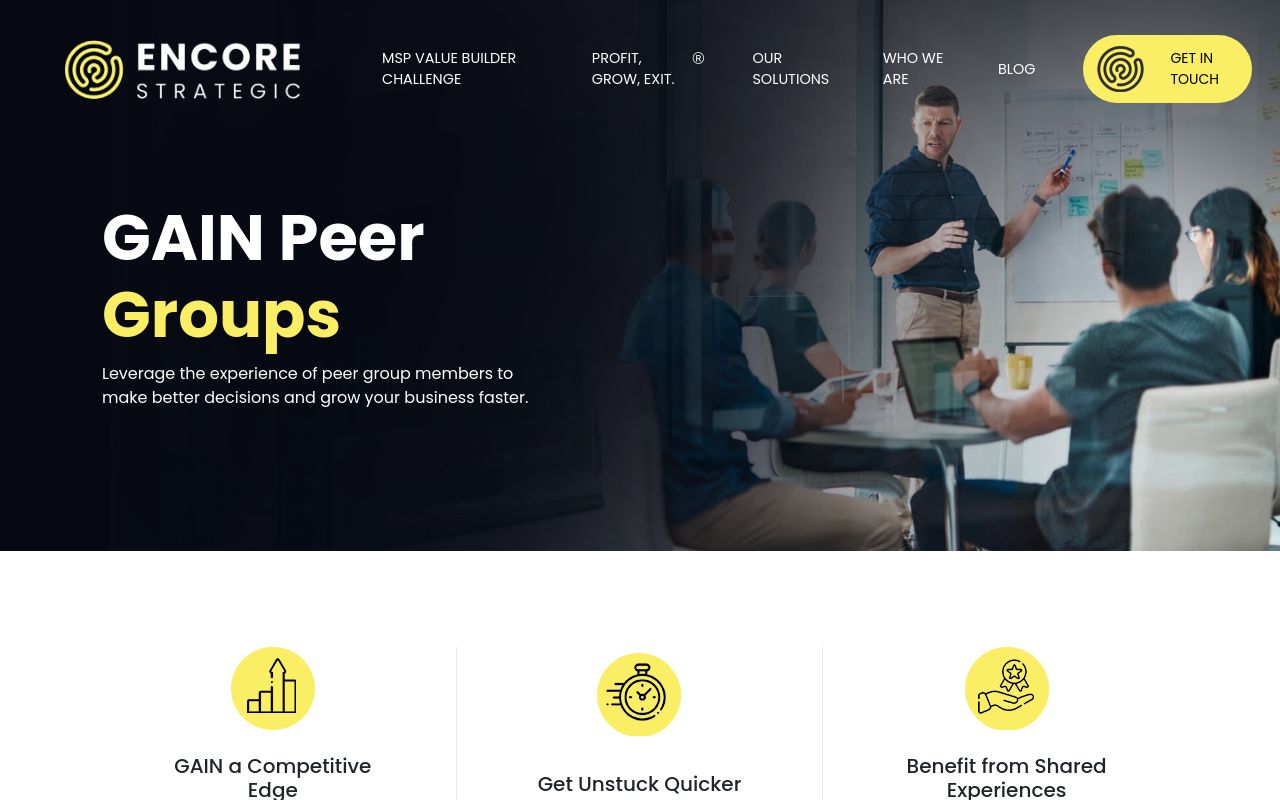
Encore Strategic GAIN Peer Groups page headed GAIN Peer Groups, with the line about leaning on the experience of peer group members to make better decisions faster
encorestrategic.co, captured 13 November 2026

Walsh ran an MSP to locations in four states and exited it to a national information technology services company, which is the background that matters most in this category. He is facilitating a conversation he has already had with himself.

Three things on their page are the reason GAIN belongs on the shortlist. Groups are capped at 12, which is small enough that you get real airtime. Every member and every facilitator signs an NDA, and groups are composed exclusively of non-competing companies, so the confidentiality is contractual rather than cultural. And groups are tiered by revenue and operational maturity, which is a more useful split than revenue alone, because a disciplined $2M business and a chaotic $6M business have very little to teach each other.

Their own framing is unusually direct about what the room is for: leaning on other members' experience to make better decisions faster, rather than absorbing a curriculum. Their newer site adds that the firm takes no vendor money and carries no vendor sponsorships.

Best fityou want a small, contractually confidential room run by someone who has done the exit.

Think twice ifyou need to know the cost before you invest time. No price and no total membership figure is published, so the shortlist takes a call.
02

MSP Peer Groups, MSP Advisor

Hand-built rooms capped at 12, with a published starting price and mandatory quarterly benchmarking

Benchmarking Independent Price published
Convened by
Dave Wilkeson, Founder
Type
Benchmarking
Vendor-run
No
Format
Hand-built groups of non-competing owners at similar scale, one MSP per market, each with a goal-oriented theme and facilitated by former MSP owners and operators. In-person groups meet quarterly for two days with an online session in the months between; online groups meet monthly. A quarterly benchmark submission is mandatory
Price
From $400 per month, on a 12-month commitment
Size
Rooms capped at 12 MSPs. Most of their clients run MSPs between $1.5M and $10M in revenue, per their homepage
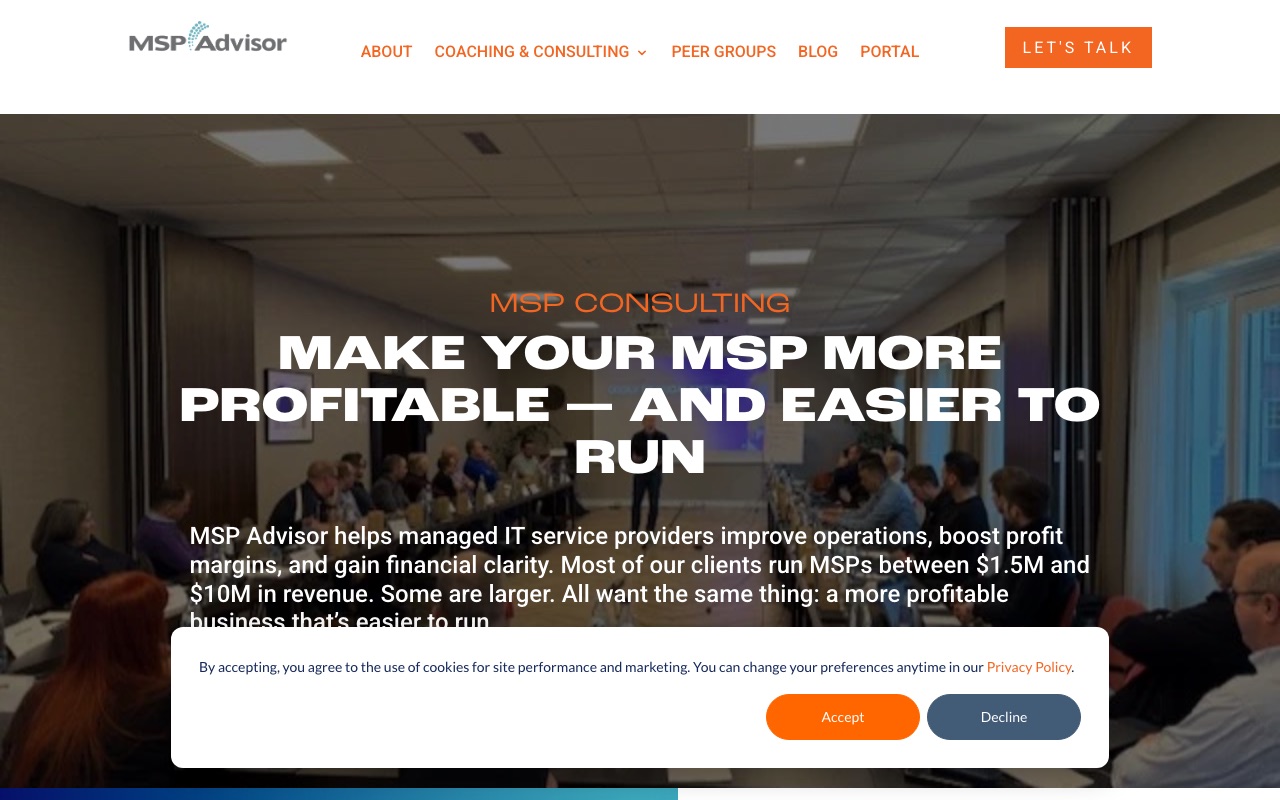
MSP Advisor homepage headed Make Your MSP More Profitable and Easier to Run, over a photograph of owners seated around a long boardroom table, with a cookie consent banner across the foot of the page
mspadvisor.com, captured 15 September 2026

Wilkeson co-created the N-able industry benchmark behind entry 14 with Robert Wilburn, and the two of them went on to write Profit and Growth for MSPs. Before the advisory work he grew a 12-person value-added reseller (VAR) into an 85-person managed services company and exited it. The person convening the room also helped build the dataset a room like this measures itself against.

Their peer-group page describes rooms built one at a time rather than filled: a small curated roster of non-competing owners at similar scale, each group carrying a goal-oriented theme, facilitated by former MSP owners and operators and underpinned by financial and operational benchmarking. MSP Advisor's team page names operators behind the advisory firm too: Brian Cerny was president and chief operating officer of a 50-employee MSP, and Vincent De Beer has led MSPs of more than 100 staff.

Unusually for a facilitated room, the commercials are published: from $400 a month on a 12-month commitment, rooms capped at 12, and a quarterly submission of financial and operational numbers that is mandatory, not optional. The route in is a short fit call, and they say placement usually takes about 30 days. The room also sits inside an advisory firm that sells coaching, on-site training and consulting on professional services automation (PSA) platforms, and Instrumental, the outsourced accounting firm at entry 2 on our accounting page, names Wilkeson on its homepage as the MSP expert behind its chief financial officer (CFO) level guidance. Not a platform stack, and still a commercial relationship worth having in view.

Best fityou want a small independent room grounded in real benchmarking, run by people whose operating record is published rather than implied.

Think twice ifyou want to try before committing. Membership runs on a 12-month commitment, and you will submit standardized financial and operational numbers every quarter.

03

The Next Level, MSP Fuel

Whole-team coaching with a quarterly peer meeting, run by two exited MSP operators

Accountability Independent No published price
Convened by
Doug Lowenthal and Howard Borochaner, co-founders
Type
Accountability
Vendor-run
No
Format
Small-group coaching for the owner, operations, sales and team-leader seats inside one company membership, plus quarterly Next Level meetings: in 2027, three three-day meetings in person and one two-day meeting online
Price
Not published
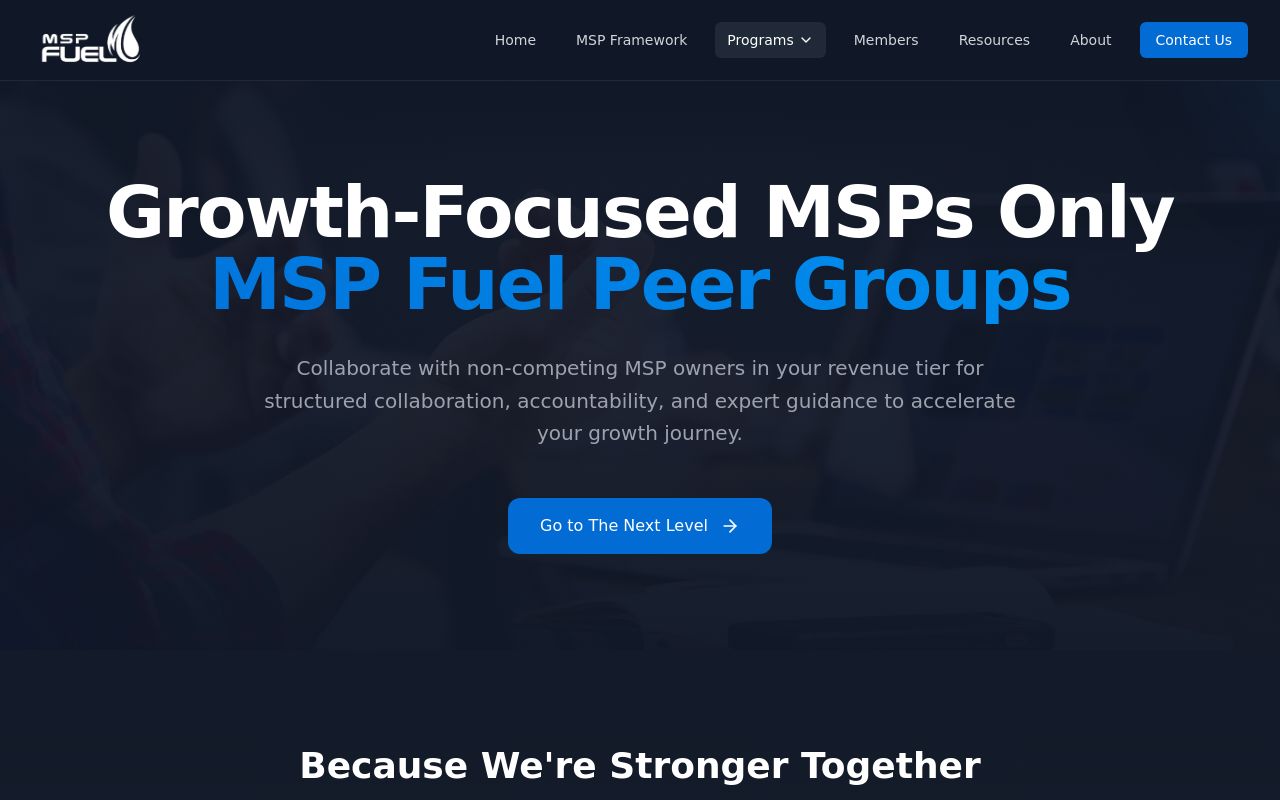
MSP Fuel meetings page headed Step out of the day-to-day. Get clear on the next quarter, beside a video still of a full meeting room, with a cookie consent panel in the lower left
mspfuel.com, captured 13 November 2026

Both founders scaled and exited their own MSPs, each reaching at least seven figures in earnings before interest, taxes, depreciation and amortization (EBITDA), per their about page. Borochaner covers operations and Lowenthal sales and finance, with coach Brian Curtis on leadership and business planning.

The model changed this year, and it is now closer to coaching with a peer room attached than a classic peer group. MSP Fuel sells one company membership at one company price, with separate small-group coaching for the owner, operations, sales and team-leader seats, all tied to a single company plan. The quarterly Next Level meeting, which their site calls its peer-group meeting experience, is where those leaders compare results against that plan with other MSPs.

It is built for established businesses, generally $3M plus in annual revenue and 15 or more employees. Entry starts with a 45-minute, owner-only MSP Scale Assessment, and no price is published.

Best fityou want your leadership team, not just the owner, coached against one plan by operators who have exited.

Think twice ifyou are under about $3M in revenue or 15 staff, or you want a seat for yourself alone. That is their stated target, and it is a company program rather than an owner's room.

04

Inspire, MSPAlliance

Built for the top of the market, with quarterly meetings held at member offices

Accountability Independent No published price
Convened by
Charles Weaver, Chief Executive Officer and co-founder
Type
Accountability
Vendor-run
No
Format
12 monthly virtual meetings on the last Thursday, plus 4 quarterly in-person meetings
Price
Not published
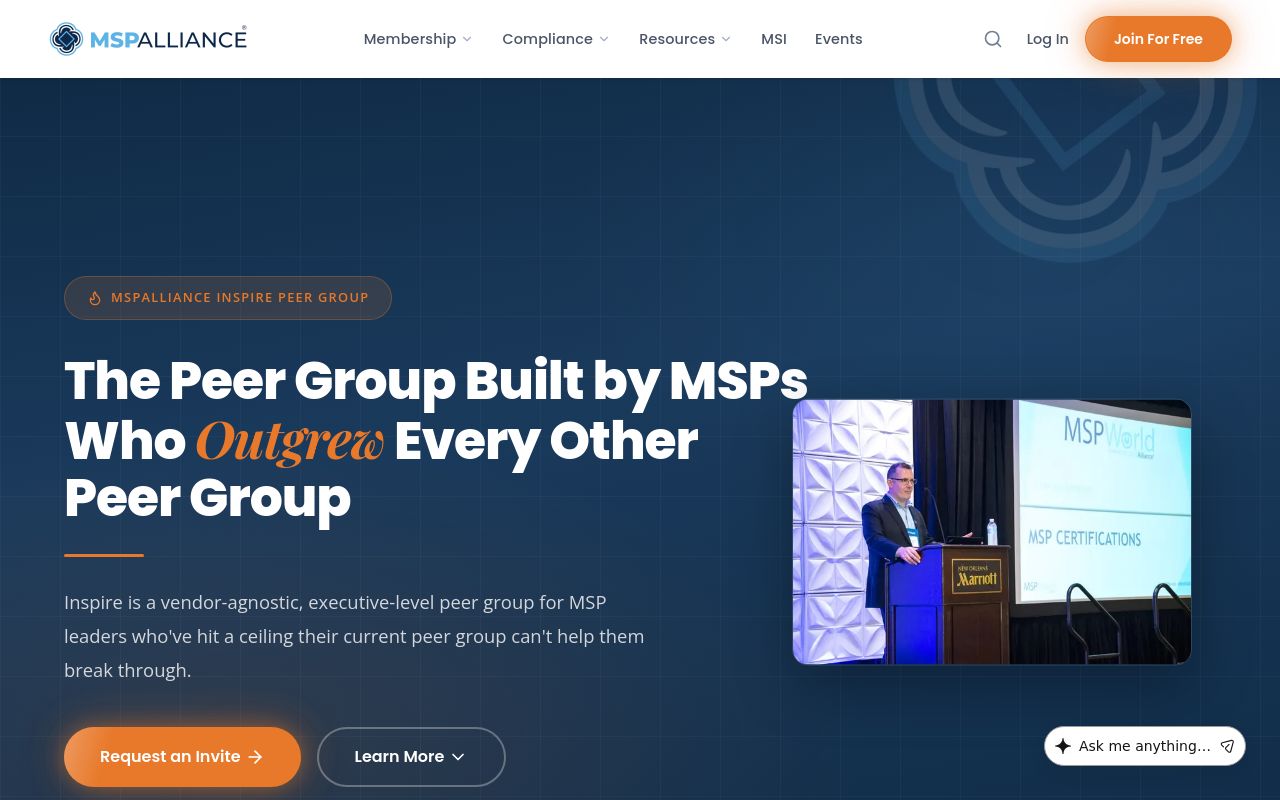
MSPAlliance Inspire page headed The Peer Group Built by MSPs Who Outgrew Every Other Peer Group, with a Request an Invite button
mspalliance.com, captured 3 September 2026

Weaver co-founded MSPAlliance with Celia Weaver in 2000, and its own page describes more than 25 years of advancing the managed services profession, which makes this one of the longest-standing institutions on this list. Only ASCII, at entry 8, goes back further.

Inspire is aimed deliberately at the top of the market and its pitch is a critique of the rest of the category. Their page argues that too many peer groups are vendor-owned and built for sub-$2M businesses, and that if you have been the smartest person in the room for too long you need a different room. The membership form asks for annual revenue starting at $2M to $5M, conversations are framed around growing from $4M to $80M plus, and they state that members average 15 or more years in the industry. Groups are geographically separated so nobody sits with a direct competitor, and MSPs backed by private equity are not admitted.

The most interesting mechanic is new: quarterly meetings are now held at member offices, so you see how another operator actually runs rather than hearing about it. Locations named include Miami, Las Vegas, Scottsdale, New Orleans and Boston.

Best fityou are past $4M, vendor-agnostic by choice, and want valuation and acquisition conversations with peers at your level.

Think twice ifyou are early. It is invite-only, the revenue selector starts at $2M, and the room is explicitly built for mature operators.

05

Peer Group Matchmaking, The Tech Tribe

A published monthly price you can read before you speak to anyone

Community Independent Price published
Disclosure: Alexej Pikovsky is a member of The Tech Tribe. The entry gets the same template and the same honest limitation as everyone else.
Convened by
Nigel Moore, Founder
Type
Community with peer group matchmaking
Vendor-run
No
Format
Regular matchmaking events that place you with a group of MSPs at a similar level; group size and cadence not published
Price
$59 per month Essentials and $79 per month Growth, with an annual option listed at $790; the application-only Rainmakers tier, where the site lists its accountability program, is not priced
Size
Their site says more than 5,000 people have joined since 2017
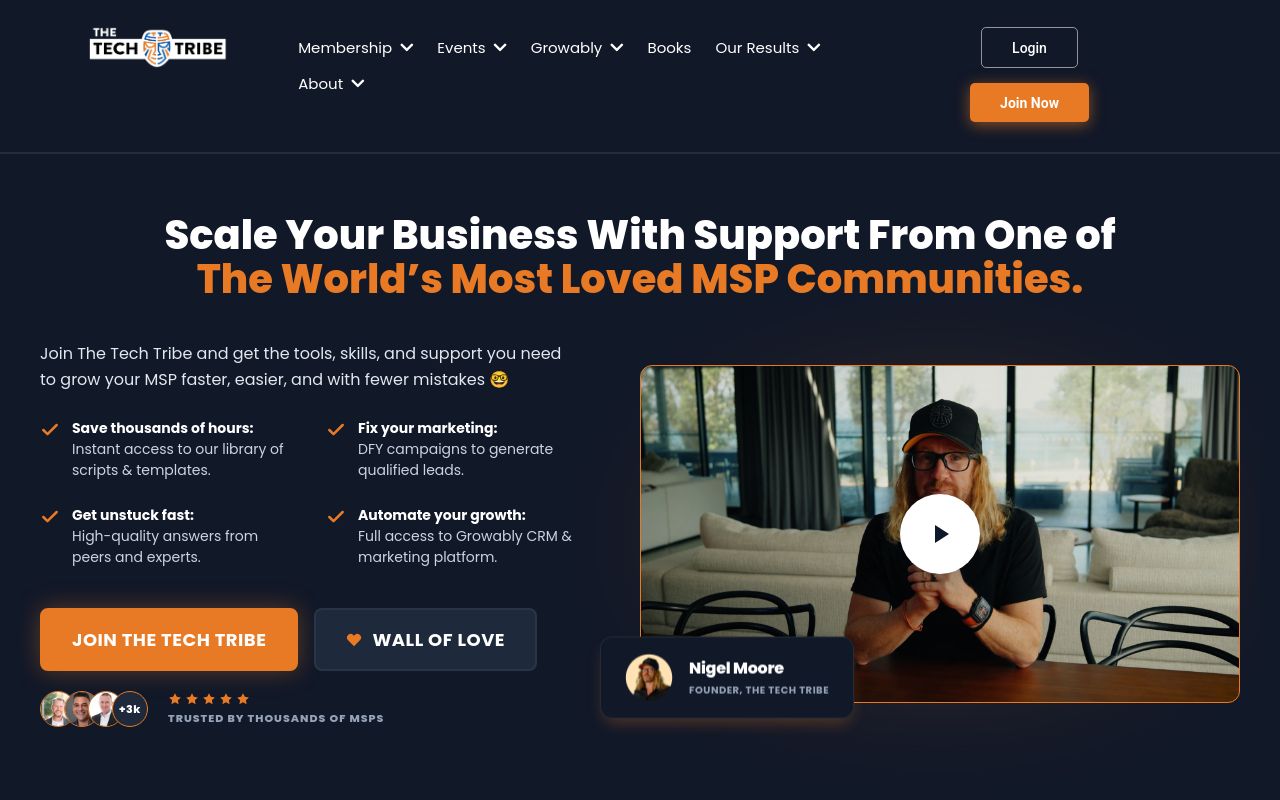
The Tech Tribe homepage headed Scale Your Business With Support From One of The World's Most Loved MSP Communities, with founder Nigel Moore in a video panel
thetechtribe.com, captured 3 September 2026

The lowest published price on this list for a membership with peer group matching. Moore started in the industry in 1998 and ran an MSP, acquired in 2016, before building the Tribe, which its site says more than 5,000 people have joined since 2017.

Peer groups are a feature inside the wider membership rather than the product itself. The site describes regular matchmaking events that put you with other MSPs at a similar level, and lists a formal accountability program and an intimate peer group only in Rainmakers, the application-only tier. Vendors are allowed in the community under a no-pitching policy.

Set your expectations accordingly. This is not a facilitated benchmarking room, and the join page is clear that the base price includes no private one-to-one coaching. What you are buying at $59 to $79 a month is a library of more than 1,000 templates, resources and workshops, a fast-moving community, and an introduction to peers at a similar level.

Best fityour first peer group, or you want a template library and a room that answers questions within hours.

Think twice ifyou need facilitation. Groups are matched by the Tribe, how they are facilitated and how often they meet is not published, and structured accountability sits in the application-only tier.

06

Provarro role-based peer groups

Separate rooms for chief operating officers, service, finance and sales leaders

Benchmarking Independent No published price
Convened by
Brock Kuhse, chief executive, per their Forge 2026 page; no peer-group facilitator is named. Formerly Taylor Business Group
Type
Benchmarking
Vendor-run
No
Format
10 remote 60-minute meetings a year plus 2 in-person two-day meetings, groups of 8 to 10, on the chief operating officer track
Price
Not published
Size
Groups of 8 to 10, per their own page
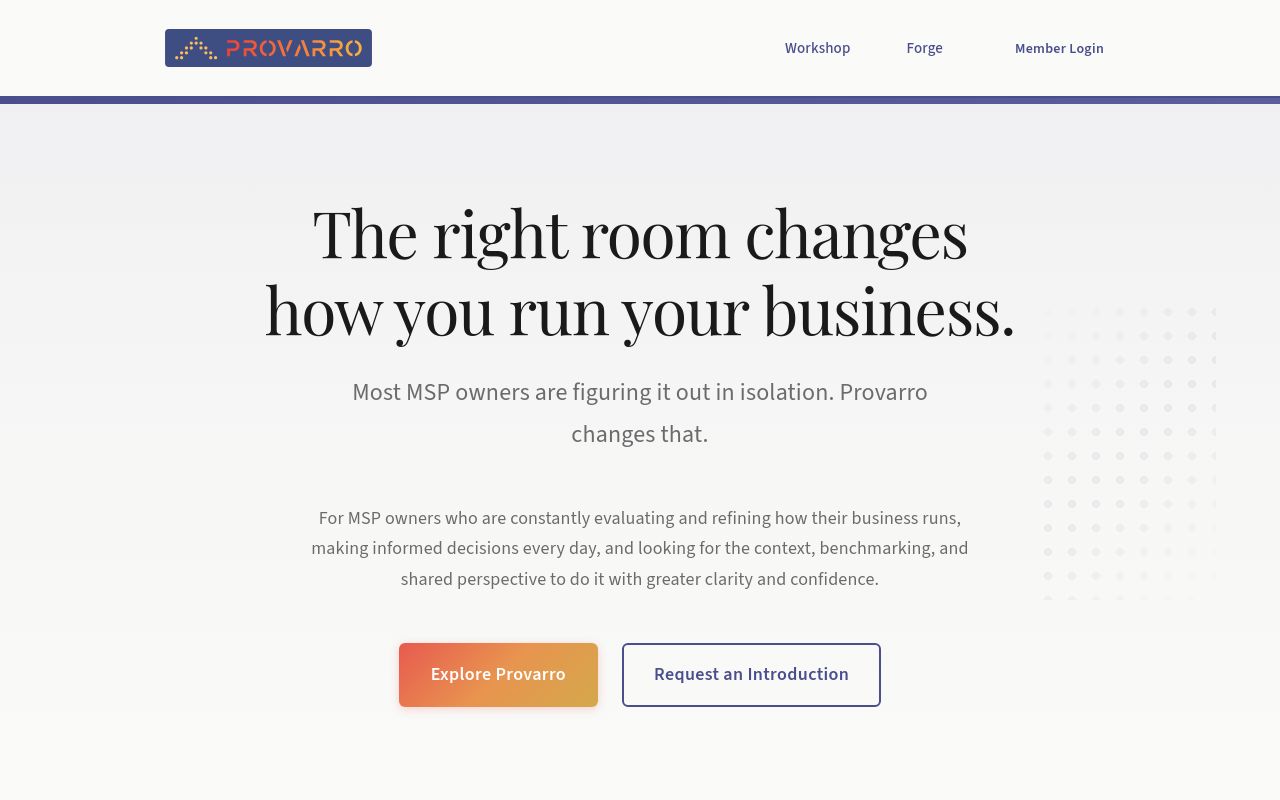
Provarro homepage headed The right room changes how you run your business, with Explore Provarro and Request an Introduction buttons
provarro.com, captured 3 September 2026

Built around roles as much as owners. Alongside an owners group they run separate rooms for chief operating officers, service delivery, project management, finance and sales leaders, which solves a problem most peer groups ignore: your service manager has nobody to compare notes with either, and sending the owner to every group does not fix that.

The chief operating officer track is aimed at operations leaders at businesses running roughly $4M to $17M in revenue, and no two members compete. Their own description of the format is the most useful line on the site: members share real numbers and challenge each other directly.

Their program pages describe the coaches who lead the groups as operators who have been in the seat, without naming them. The Forge 2026 event page names chief executive Brock Kuhse alongside panel and sponsor speakers, but none is identified as a group coach, and the old Taylor Business Group addresses now redirect to the Provarro homepage. Ask who will facilitate your specific group and what they ran before.

Best fityou are past roughly $4M and want your leadership team in rooms of their own, not just yourself.

Think twice ifthe facilitator's identity matters to you before you commit. Ask for the name and their operating background on the first call.

07

Producers Club, MSP Success (formerly Technology Marketing Toolkit)

The top tier of Kaseya's MSP Success Peer, invitation only

Accountability Vendor-run Price published
Convened by
Robin Robins, founder of Technology Marketing Toolkit, who still leads sessions; the program is now run by Kaseya's MSP Success team
Type
Accountability
Vendor-run
Yes, in substance. Technology Marketing Toolkit has been part of Kaseya since July 2025, Producers Club joined its MSP Success Peer umbrella in June 2026, and is now that program's top tier
Format
Quarterly 2.5-day in-person meetings, mostly Nashville, with one warm-weather location a year and streamed recordings
Price
$1,997 per month, or $1,897 with their marketing automation platform, per their frequently asked questions page
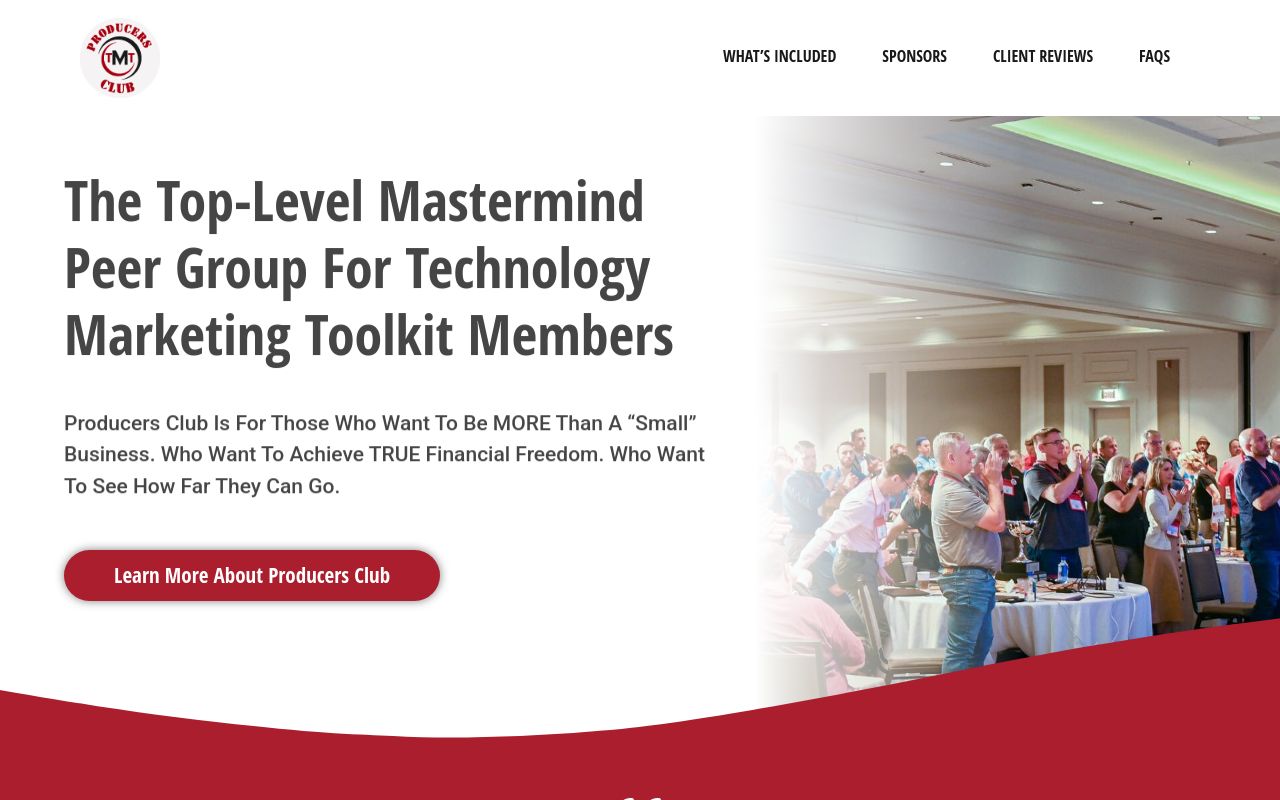
Producers Club page headed The Top-Level Mastermind Peer Group For Technology Marketing Toolkit Members, beside a photograph of a full conference room applauding
tmtproducersclub.com, captured 3 September 2026

Robins is one of the most visible and longest-running names in this category. Her own site describes more than 25 years in MSP marketing, more than 10,000 MSPs consulted, and growing Technology Marketing Toolkit into what she calls the largest MSP peer group in the industry before exiting in 2025. Producers Club sits at the top of that structure and describes itself as the top-level mastermind peer group for Technology Marketing Toolkit members.

You cannot simply buy in. It is invitation-only, you must already be a senior member who has completed the fundamentals program, and a client coach has to approve you as the right fit. Active participation is a stated requirement rather than a suggestion.

What you are buying is a room of operators executing the same marketing system as you, which is both the strength and the limit. Comparisons are unusually direct because the playbook is shared, and the shared playbook is also the ceiling.

Ownership changed in 2025. Kaseya's own release of July 8, 2025 says it joined forces with Technology Marketing Toolkit and moved Robins to a strategic advisory role, and on June 9, 2026 Kaseya brought Technology Marketing Toolkit and TruMethods Peer under one umbrella, MSP Success Peer, where Producers Club is now the top tier, aimed at MSPs with $1M or more in revenue and five or more employees. Read entry 9 with that in mind: two of the best-known rooms in this category now have the same owner, and that owner sells a stack.

Best fityou already run the Technology Marketing Toolkit system and want the top tier of that world.

Think twice ifyou do not. There is no route in that does not start with the parent program, and the room's frame of reference is that program.

08

ASCII peer collaboration, The ASCII Group

1,300 plus member companies, vendor-neutral, now a GTIA community

Community Association-owned Price published
Convened by
Jerry Koutavas, Vice President, Community, per their leadership page; ASCII has been part of GTIA since September 2026
Type
Community
Vendor-run
No. Explicitly vendor-neutral, and owned since September 2026 by GTIA, a nonprofit trade association
Format
Private virtual forums plus small-group meetings, virtual and in person, alongside larger events
Price
Included in membership: $839 a year, which bundles $450 of GTIA membership with $389 for ASCII, per their membership page; peer groups carry no extra fee
Size
1,300 plus member companies across North America
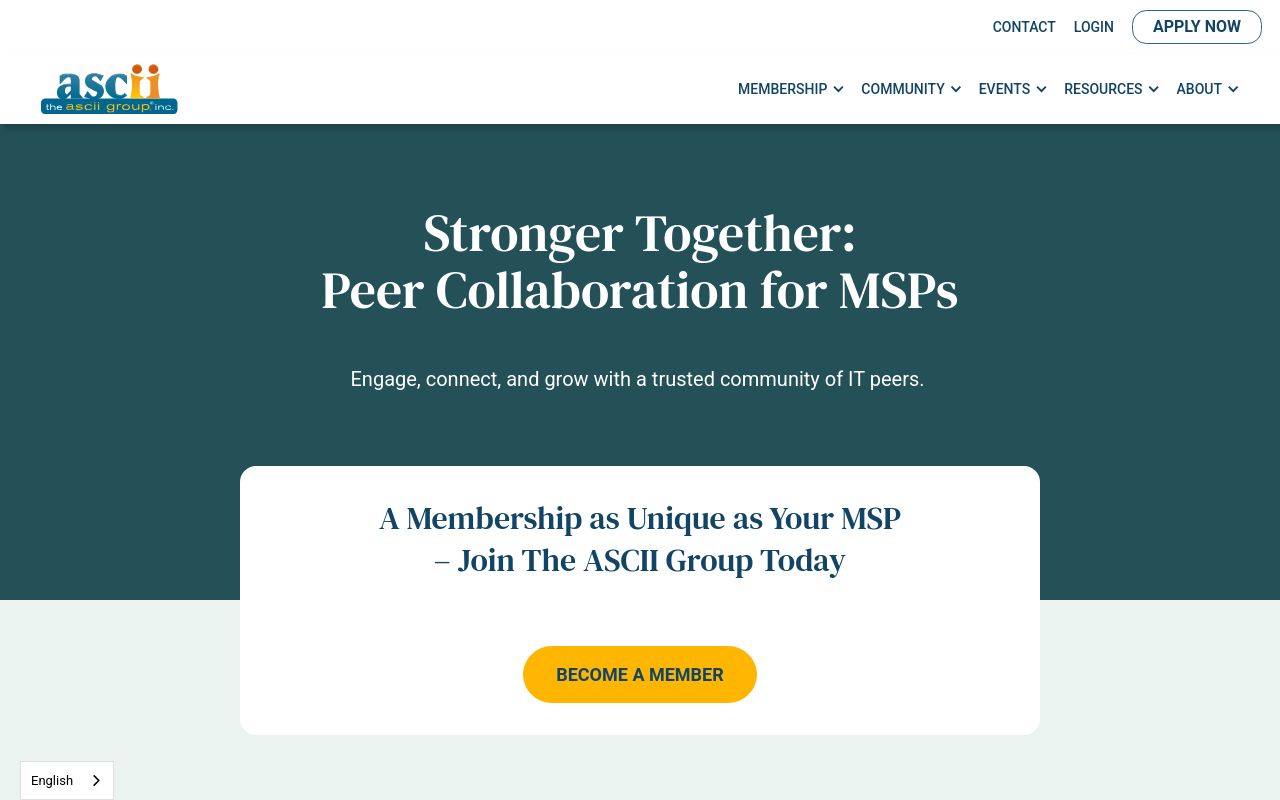
The ASCII Group peer collaboration page headed Stronger Together, Peer Collaboration for MSPs, with a Become a Member button
ascii.com, captured 3 September 2026

The longest-running community here, with 1,300 plus member companies across North America and roughly four decades of history. Koutavas became chief executive in June 2025 after close to 30 years in the channel, and ASCII's own materials credit the peer network with more than 500,000 member-to-member exchanges. In September 2026 GTIA acquired ASCII's assets, and ASCII now runs as its own community inside GTIA, keeping its forums and Edge events, with GTIA membership included in the price.

The model is breadth. Peer collaboration is one of a large number of programs inside a single membership, delivered through private forums, branded small-group programs, and in-person events including their regional Edge events. Vendor neutrality is a stated principle and there is no vendor pitching in the peer settings.

That breadth is also the trade. Because the peer component is bundled inside a membership that covers many other benefits, from procurement to education, you cannot price or size the peer-group element on its own, and it is a large community rather than one curated cohort.

Best fityou want a vendor-neutral community with long institutional memory and many ways in.

Think twice ifyou specifically want one small fixed room. This is a network with peer programs inside it, not a single benchmarking cohort.

09

TruPeer, MSP Success (formerly TruMethods)

The heaviest accountability cadence here, now run by Kaseya

Accountability Vendor-run No published price
Convened by
Kaseya's MSP Success team, led by Dan Tomaszewski, executive vice president of channel. Founder Gary Pica ran his final TruPeer event in October 2026
Type
Accountability
Vendor-run
Yes. TruMethods is part of Kaseya, and its site now sends members to MSP Success
Format
3 in-person quarterly strategic meetings plus 1 virtual meeting a year, accountability calls listed as bi-monthly (their page does not say whether that means every two months or twice a month), bi-weekly group office hours
Price
Not published
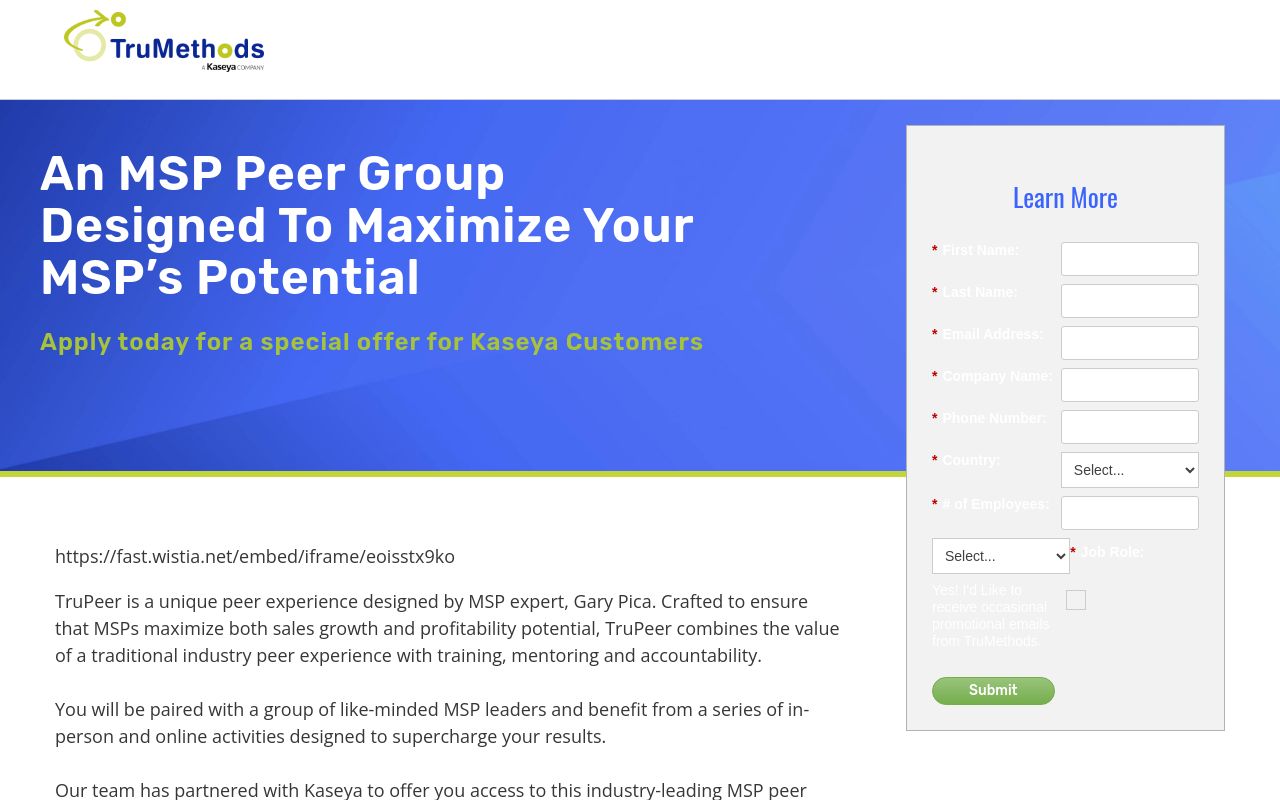
TruMethods TruPeer page headed An MSP Peer Group Designed To Maximize Your MSP's Potential, with a Learn More inquiry form and Kaseya branding
trumethods.com, captured 3 September 2026

Pica founded TruMethods in 2008, and their about page states he set out to make life easier for the MSP owners who came after him. If you have heard the vocabulary of this industry, much of it came through here.

The structure is the most intensive on this list: quarterly strategic meetings, regular accountability calls, and office hours every two weeks with their own experts alongside the peer room. Below it in MSP Success Peer sits an entry tier for emerging MSPs at around $25,000 in monthly recurring revenue and about three employees, a two-day in-person foundations workshop followed by virtual quarterly sessions, which is unusual because most programs at this level will not take a business that small.

The thing to weigh is ownership. TruMethods is inside Kaseya now, and Kaseya's own MSP Success site reports that October 2026 was Pica's final TruPeer event before he moved on. The framework is genuinely independent of any product in its logic, and the company that owns it sells a stack. Ask directly how the room handles a member whose honest next move is to leave that stack.

Best fityou want the framework this industry was largely built on, with a heavy accountability cadence.

Think twice ifvendor independence is your first criterion. The methodology is now owned by a platform company.

10

IT Nation Evolve, ConnectWise

A large vendor-run program, with a track for $750,000 to $1.5M

Accountability Vendor-run No published price
Convened by
No individual program lead is named on their page. Run by ConnectWise
Type
Accountability
Vendor-run
Yes
Format
Essentials is monthly two-hour virtual sessions over 12 months; the owners and chief executives track is quarterly two-day in-person sessions plus monthly virtual accountability calls; a role-based track runs quarterly in-person meetings by function for executive leaders
Price
Not published
Size
More than 1,000 group members, per their own page
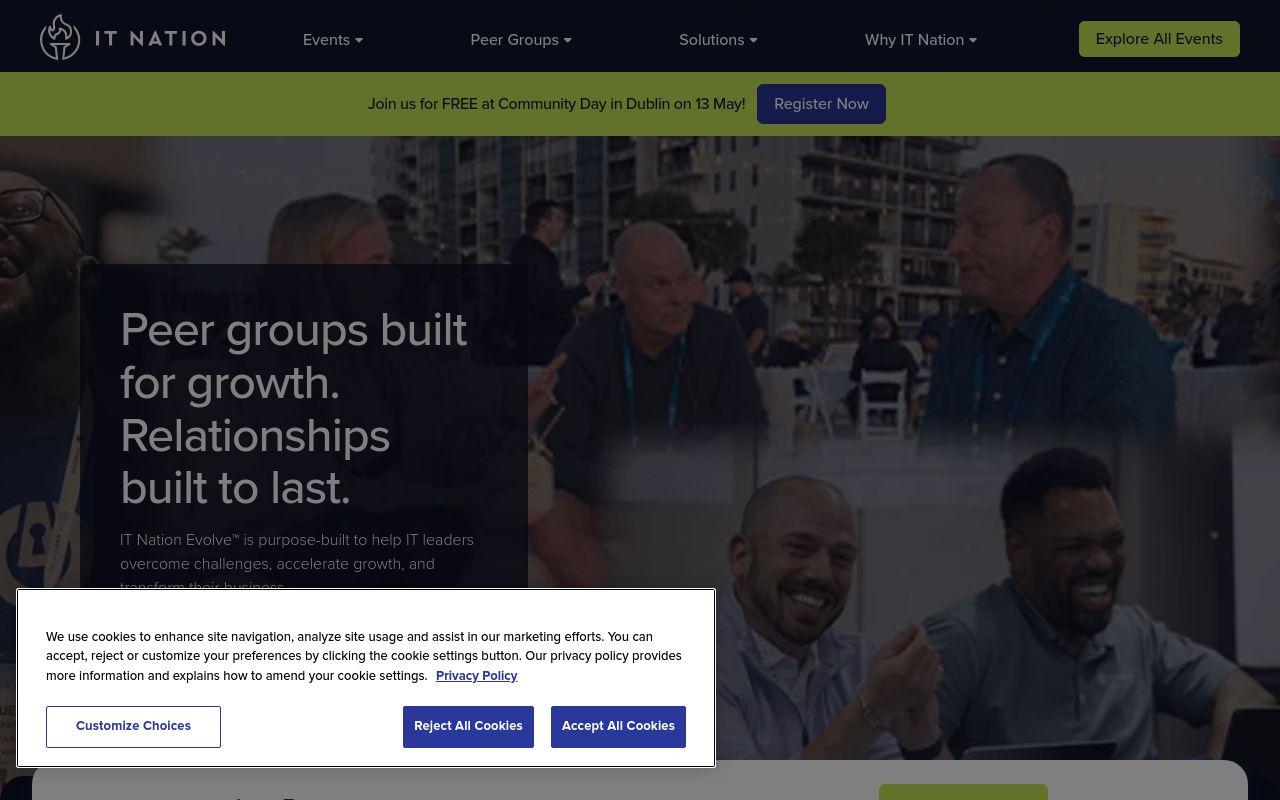
ConnectWise IT Nation Evolve page headed Peer groups built for growth, Relationships built to last, over a photograph of members talking at an event
itnation.connectwise.com, captured 3 September 2026

One of the largest programs in the category, with more than 1,000 group members, and the successor to the HTG peer groups that shaped this whole format. It is also the only one here with a track defined explicitly by revenue at $750,000 to $1.5M, which is where most owners first need this and where most programs will not take them.

Their published claims are a 24% improvement in EBITDA and 20% faster growth than the industry average. Those are their figures, measured by them, and nobody in this category publishes audited outcomes. The frameworks are named and long-established, including operational maturity level, curve jumping and legacy planning.

ConnectWise also runs the Service Leadership Index peer groups, which are the benchmarking-heavy sibling: quarterly meetings of about a day and a half, one or two executives per company, composed of non-competing geographies and similar business models, described on their page as a confidential and vendor-free environment.

Best fityou are between $750,000 and $1.5M and want structure, or you want structured financial benchmarking alongside the peer work.

Think twice ifyou want an owner-run room. This is a platform vendor's program, and no individual facilitator is named publicly.

11

GROW Peer Groups, Marketopia

Published seat counts and a published price, inside a marketing agency

Accountability Vendor-run Price published
Convened by
Terry Hedden, co-founder
Type
Accountability
Vendor-run
Yes in substance, since Marketopia sells marketing and lead generation to MSPs
Format
Virtual sessions, twice a month per their events page, with individual groups listed as monthly or bi-weekly, plus three Springboards a year at their Pinellas Park, Florida headquarters and the annual GROWCON in Fort Lauderdale
Price
$1,999 per month for the MSP Elite 32.6 Club, with a 100-day commitment pledge; other tiers not published
Size
12 in the Growth Mastermind, 10 in the Channel Leadership Forum, 15 in AI Practice Builders
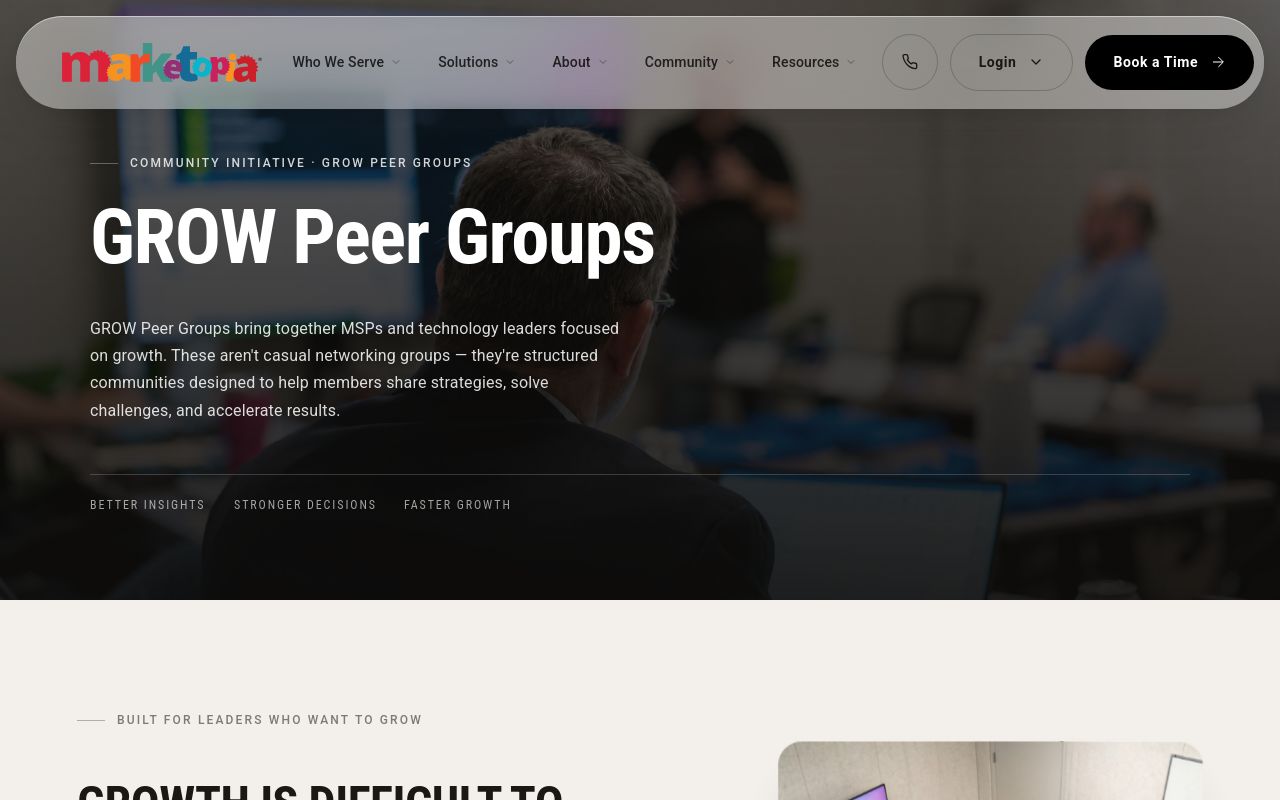
Marketopia GROW Peer Groups page headed GROW Peer Groups, describing structured communities for MSPs and technology leaders focused on growth
marketopia.com, captured 3 September 2026

Hedden co-founded Marketopia in 2014 after operating in this industry himself, and the peer groups sit inside a marketing agency rather than a coaching practice.

Two things here are more transparent than the category norm. Seat counts are published per room, so you can see the scale before you join: 12 in the Growth Mastermind, 10 in the Channel Leadership Forum, 15 in AI Practice Builders. And the top tier carries a real number, $1,999 a month, aimed explicitly at operators moving from a three to five times EBITDA multiple toward five to ten times. In a category where almost nobody publishes a price, both are worth credit.

The honest caveat is what the parent company sells. A room convened by your marketing vendor is a useful room and it is not a neutral one, and the agenda will tend toward demand generation because that is the house expertise. If marketing is your constraint, it helps to walk in with your own MSP marketing strategy first.

Best fityou want valuation-focused peer conversation and published seat counts, and marketing is your live constraint.

Think twice ifyou want independence from suppliers. This one sells to you as well as convening you.

12

MSPGeek

Free, nonprofit, and the fastest technical answer at 11pm

Community Independent Price published
Convened by
Martyn T. Keigher, Founder and President, with Mendy Green as chief executive officer
Type
Community
Vendor-run
No
Format
Always-on forums and chat, plus the annual MSPGeekCon
Price
Free, with optional Advocate at $4.99 per month and Enthusiast at $19.99 per month
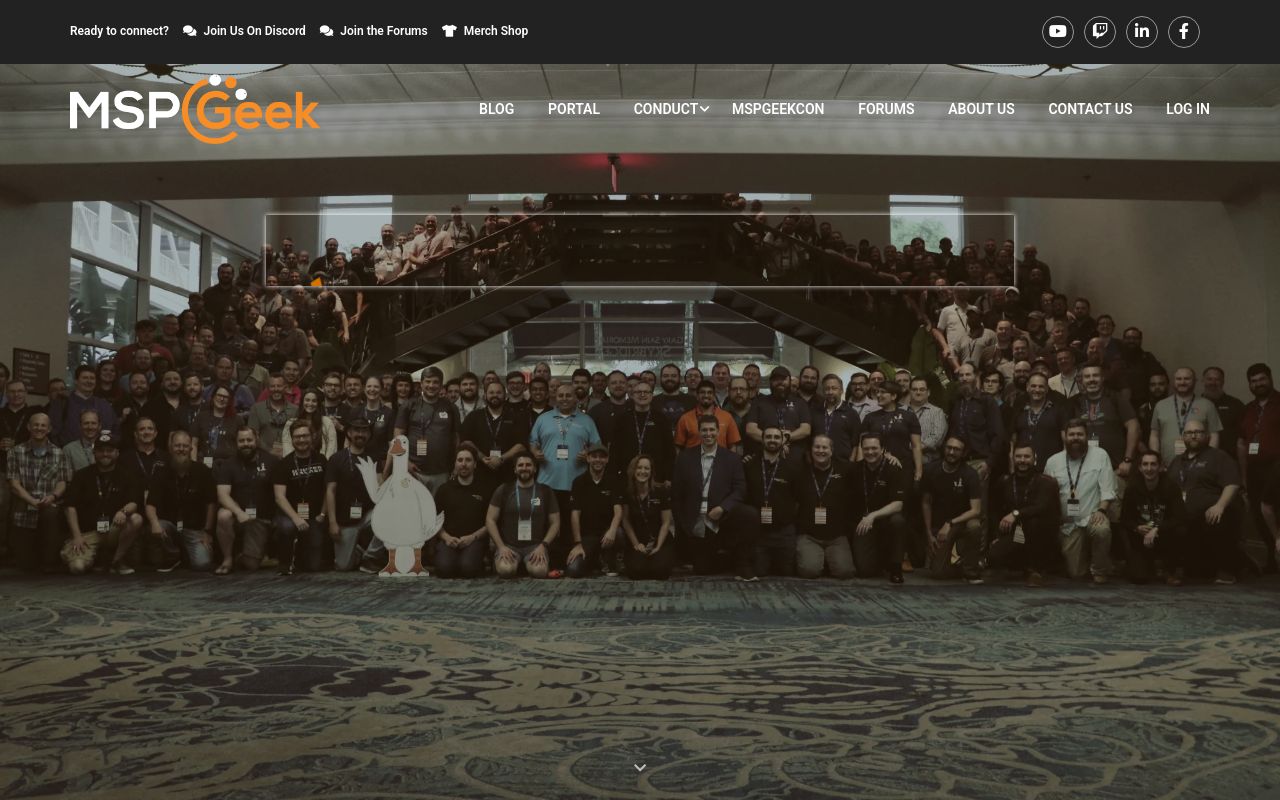
MSPGeek homepage showing a wide group photograph from MSPGeekCon, above navigation to the forums, portal and Discord
mspgeek.org, captured 3 September 2026

Not a peer group in the strict sense, and included because for a large number of owners it is the thing that actually answers the question at 11pm. It is a nonprofit community, free at the base tier, and it is where the technical depth of this industry congregates.

The board is the tell. Alongside Keigher it seats practitioners from vendors and consultancies and Kelvin Tegelaar, the chief technology officer at Lime Networks. A community whose board is made of the people other people quote is a different proposition from a forum.

Be clear about what it is not. There is no vetting, no non-competing rule, no cohort and no accountability. You will get an answer to a technical question faster than anywhere else on this page, and you will not get anyone holding you to a plan.

Best fiteveryone, as a supplement. At free, the only cost of being wrong is your attention.

Think twice ifyou want a curated room. It is a large open community, and your competitor down the road may well be in it.

13

GTIA member groups

The vendor-neutral association layer that used to be CompTIA's community

Community Independent Price published
Convened by
MJ Shoer, Chief Community Officer, under chief executive Dan Wensley
Type
Community
Vendor-run
No, this is a vendor-neutral industry association
Format
Member groups, regional communities and advisory councils
Price
Membership dues published at US $450 a year; the peer element is not priced separately
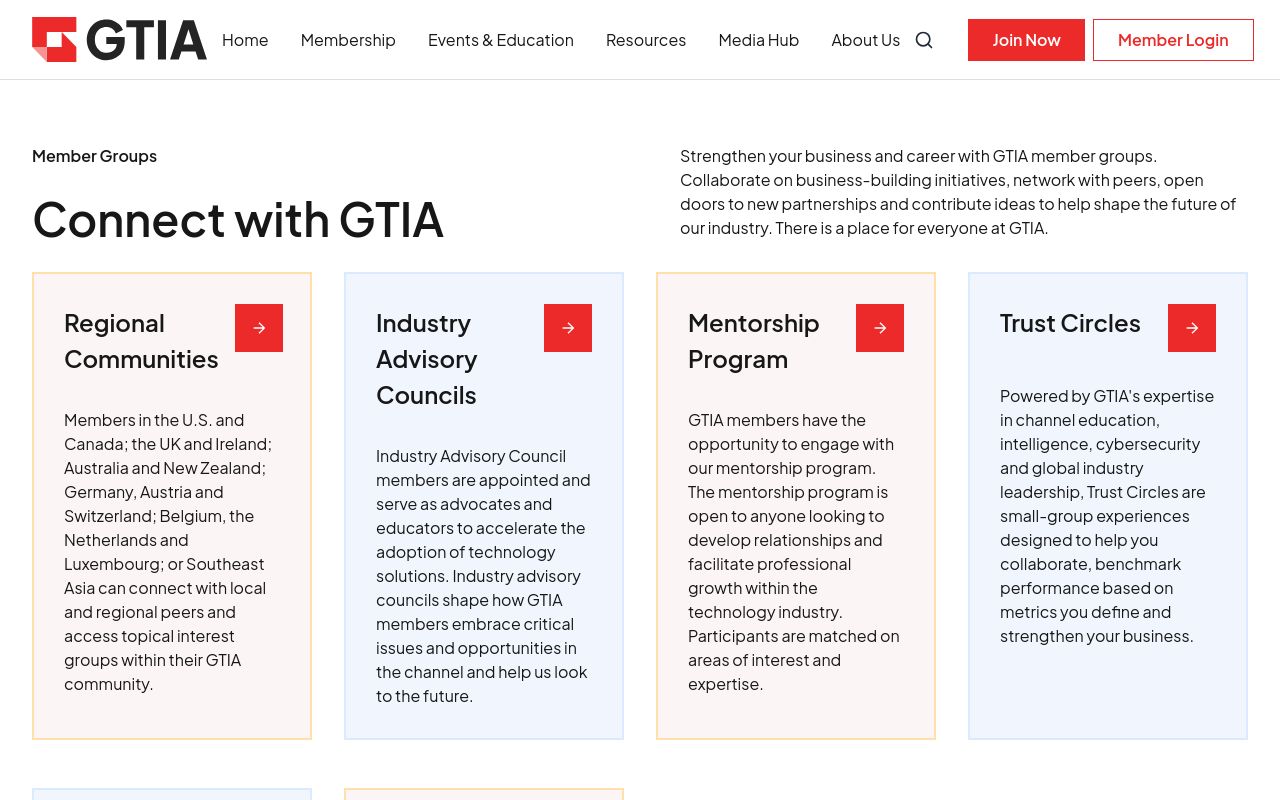
GTIA member groups page headed Connect with GTIA, with cards for Regional Communities, Industry Advisory Councils, the Mentorship Program and Trust Circles
gtia.org, captured 3 September 2026

This is the community arm that was CompTIA's, now operating as the Global Technology Industry Association. If you belonged to a CompTIA community, this is where it went, and the rename is recent enough that plenty of owners have not registered it yet. In September 2026 GTIA also acquired the assets of The ASCII Group at entry 8, which now runs as its own community inside GTIA.

The proposition is association-level rather than cohort-level: member groups organized around business-building initiatives, regional communities, advisory councils, a mentorship program, and a security information-sharing organization for members. Shoer, as chief community officer, is the person who convenes it, and its board draws from across the channel, mixing MSP operators with vendor and distributor executives.

The closest thing to a peer room is Trust Circles, a new small-group program for collaborating and benchmarking on metrics you define, piloting first with members in the United States and Canada. GTIA publishes no cadence, group size or separate price for it, so treat GTIA as the vendor-neutral association layer that sits alongside a peer group rather than replacing one.

Best fityou want vendor-neutral industry access, standards work and regional connections.

Think twice ifyou want accountability. Trust Circles are still a pilot, and no cadence or price is published for them.

14

N-able Peer Groups, N-able Business Transformation

A benchmark-backed room run by N-able's Business Transformation team

Benchmarking Vendor-run No published group price
Convened by
Chris Massey, Head of Business Transformation, with Laura White, Executive Program Manager
Type
Benchmarking
Vendor-run
Yes, N-able
Format
Groups of 7 to 12 non-competing MSPs of similar size and stage; online groups meet for 90 minutes a month, onsite groups add a two-day in-person meeting each quarter
Price
No price published for the peer groups; the executive onsites and the benchmark are listed as complimentary
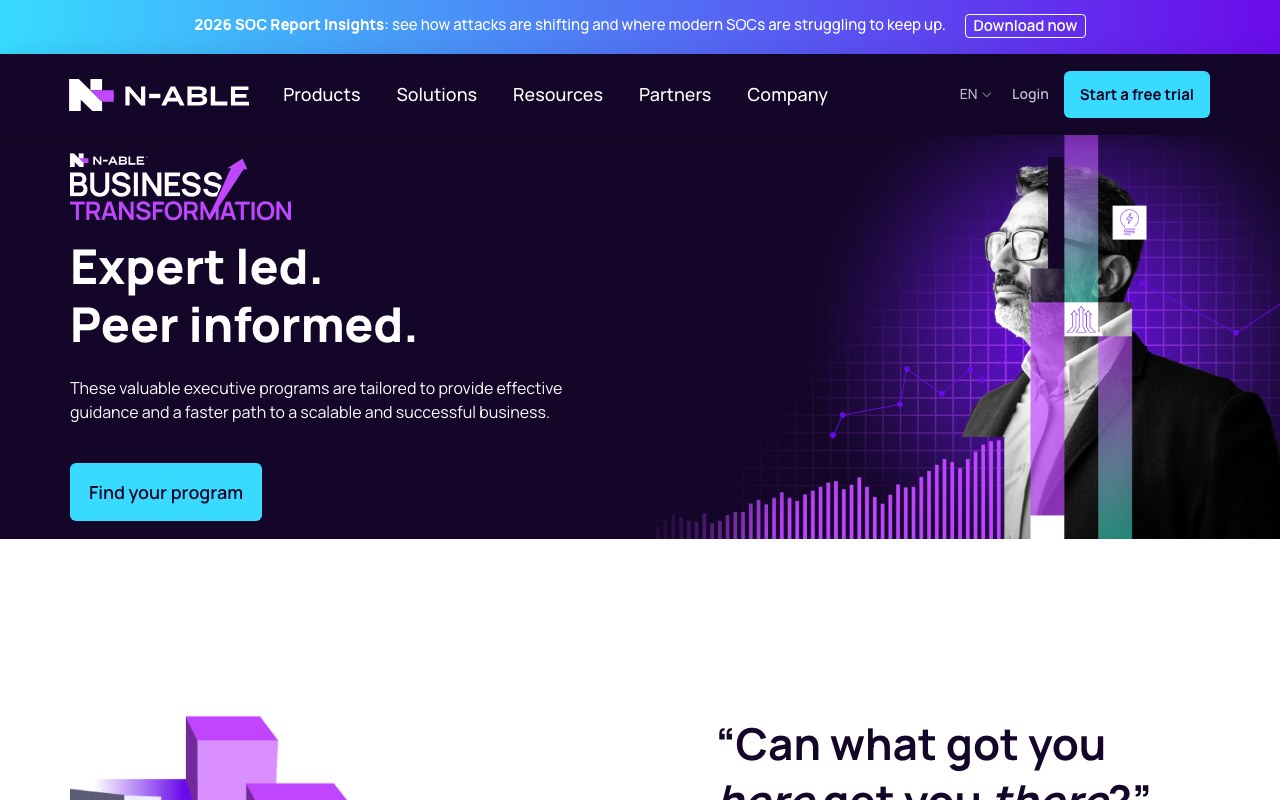
N-able Business Transformation page headed Expert led. Peer informed., with a Find your program button
n-able.com, captured 8 September 2026

The peer groups sit inside N-able's Business Transformation program, alongside two things N-able lists as complimentary: two-day executive onsites organized by topic, and an anonymous benchmark you can filter by revenue and geography. That benchmark was co-created by Robert Wilburn and Dave Wilkeson, according to the authors' own site, who went on to write Profit and Growth for MSPs, and it is the reason the rooms work. Members bring numbers, and the numbers are compared against a real dataset rather than a hunch.

The format is more disciplined than most partner programs. Groups are curated so members are not competitors, the seat is meant for the owner or chief executive plus one optional second executive, former MSP executives facilitate, and N-able states it leaves the room when the financial discussion turns sensitive. The onsite track is pitched at medium and large MSPs; the online track runs 90 minutes a month. The most recent executive onsite ran in Portugal from November 10 to 12, 2026, and no further executive onsite is listed as of November 13, 2026.

The thing to weigh is the door. You get in through your N-able growth strategist, account manager or partner success manager, so the room sits inside an existing N-able relationship, and that is also the limit: this is not the room that will tell you to leave the platform, so ask how they handle it when a member's honest next move is exactly that.

Best fityou already work with N-able and want a benchmark-backed room with a real cadence.

Think twice ifvendor independence is your first criterion, or you have no N-able account team to ask about a seat.

15

Peer groups, MSP-Ignite

Up to ten non-competing peers, month-to-month, with a 90-day money-back guarantee

Accountability Independent No published price
Convened by
Steve Alexander, Founder
Type
Accountability, with a benchmarking layer
Vendor-run
No. Independent, with a vendor partner program whose members can ask for time in front of the groups
Format
Up to 10 peers from non-competing markets; monthly group calls or meetings, plus two 2-day in-person meetings a year at rotating locations, with subject matter experts on every call
Price
Not published; month-to-month terms with a 90-day money-back guarantee
Size
More than 100 clients meeting with their peers, per their homepage
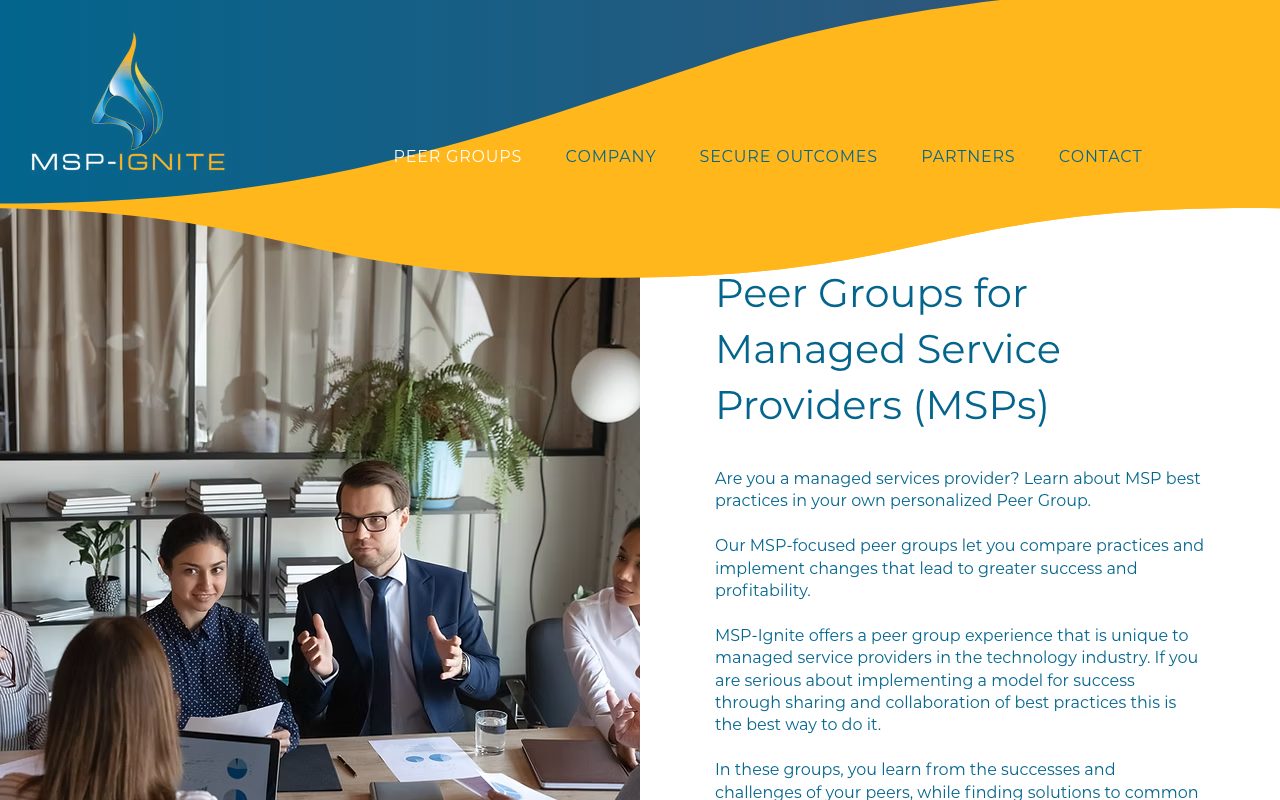
MSP-Ignite page headed Peer Groups for Managed Service Providers (MSPs), beside a photograph of a team meeting around a boardroom table
msp-ignite.com, captured 13 November 2026

Alexander's own biography describes more than 35 years in managed services, founding, building and selling two MSPs, and a hand in dozens of merger and acquisition deals. He trains the facilitators and leads several groups himself, and some of the facilitators named on the team page run businesses today, including Vince Tinnirello, managing director of Anchor Network Solutions, a Denver MSP.

Their homepage ranks accountability first: holding you to your goals is, in their words, the most important part of a peer group. Benchmarking sits underneath it, with members sharing common metrics against companies whose differences they can discuss. Groups are national, so no two members operate in the same market, and members are matched on size, headcount, lines of service, ownership structure and markets served. Seats exist for owners, service managers, sales managers and salespeople, not only the owner.

Two things stand out. Terms are month-to-month with a 90-day money-back guarantee, published on their own site. And the independence comes with something to ask about: MSP-Ignite says it is not part of any vendor organization and describes a zero-upsell approach, yet it runs a vendor partner program, with names such as Rewst, Blackpoint Cyber and Cytracom, and says vendors often ask for time in front of members to get feedback on new offerings and pricing.

Best fityou want an independent, facilitated room you can leave month to month, with seats for your service and sales leaders as well as yourself.

Think twice ifyou want the price before a call, or a room no vendor ever addresses. Ask how partner time is kept apart from member discussion.

Ownership

Vendor-run peer groups, mapped by owner

Vendor-run appears in every entry above because it predicts more about a room than the price does. Here is the same fact from the other direction: which platform vendors and distributors run a room, who is allowed in, and what it costs.

Three ownership facts matter here, and most lists have not caught up with them. Kaseya now owns both TruMethods and Technology Marketing Toolkit and brought them under one umbrella, MSP Success Peer, in June 2026. ConnectWise has owned both IT Nation Evolve and the Service Leadership Index since 2021. And in September 2026 GTIA, the association at entry 13, acquired The ASCII Group. So the two most-quoted benchmarks in this industry each sit inside a platform vendor.

Vendor and distributor peer group programs, checked against each vendor's own pages on 13 November 2026
VendorProgramWho can joinWhat it costsCadence and sizeOn this page
KaseyaMSP Success Peer, launched June 2026 over TruMethods Peer (TruPeer) and Technology Marketing ToolkitThree tiers on its current page, from emerging MSPs at about $25,000 in monthly recurring revenue and three staff up to Producers Club at $1M plus in revenueTruPeer price not published; Producers Club $1,997 a month; no price shown for the entry tierTruPeer: quarterly strategic meetings, three in person and one virtual, with accountability calls between; the entry tier starts with a two-day in-person workshop, then runs virtuallyEntries 7 and 9
ConnectWiseIT Nation Evolve, the former HTG peer groups bought in 2018, plus Service Leadership and its benchmark index, bought in 2021Application; published bands from $750,000 to $1.5M up to $4M plusNot publishedMonthly two-hour virtual, or quarterly two-day in person with monthly callsEntry 10
N-ableBusiness Transformation peer groups, with the benchmark and the two-day executive onsitesNot published; the route in is your N-able growth strategist, account manager or partner success managerOnsites and benchmark free; no peer group price published7 to 12 per group; 90 minutes a month online, onsite groups add two days a quarterEntry 14
Pax8Pax8 Academy Peer Groups, by role: owner, chief operating officer, security, sales and marketing, account manager, project manager, service manager, dispatcher, plus Flight Plan groups for owners and salesPax8 partners; included for eligible partners through the Voyager Alliance program$350 a month on a six-month commitment, per their chief operating officer group one-pager6 to 10 members; two hours a month remote on Microsoft Teams plus three two-day in-person meetings a year, facilitated by a Pax8 Academy facilitator with MSP experienceNot ranked, see below
MarketopiaGROW Peer GroupsBy application; in-person Springboards are for Marketopia clients and invited guests; the parent sells marketing and lead generation to MSPs$1,999 a month for the top tierVirtual sessions, twice a month on their events page, monthly or bi-weekly on some group pages; plus three Springboards and GROWCON a year in FloridaEntry 11
NinjaOneMSP Peer Groups, announced at its MSP NXT conference in October 2026Not publishedNot publishedCoaching, accountability and shared strategies for MSP leaders; no cadence or group size publishedNot ranked, too little published
Ingram MicroTrust X Alliance, which absorbed the SMB Alliance in February 2025Nomination and invitation onlyNot publishedA community of 500 plus advisors and MSPs that Ingram Micro says reached eleven countries in November 2025 and added India in June 2026; events plus ongoing forumsNot ranked, invitation only
TD SYNNEXPartnerLINK (formerly CommunitySolv) peer groups, piloted in 2023TD SYNNEX partnersNot publishedPartner-led and positioned as vendor-agnostic; no cadence or group size publishedNot ranked, too little published
IT By DesignAI Mastermind Boardroom (Build IT Masterminds)Invite-only, MSP founders and senior executives at $2M plus in revenue, in two revenue tiersNot publishedQuarterly one-day sessions at its New Jersey headquarters plus monthly accountability calls, ten executives per boardroom; the parent builds and runs offshore delivery and 24x7 operations teams for MSPsNot ranked, invitation only

Most platform vendors run communities, not rooms. As of November 2026, the sites of Huntress, ThreatLocker, SuperOps, HaloPSA, Sophos, Barracuda, Acronis, Syncro, Auvik, Rewst, Nerdio and ScalePad show partner programs, conferences, Slack or forum communities and advisory councils, and no facilitated peer group is confirmed on them. Ask your account manager if one matters to you. NinjaOne announced MSP Peer Groups in October 2026 and is in the table above. Sherweb runs a free CyberMSP community on Microsoft Teams with monthly threat briefings, which is a community rather than a peer group. The International Association of Microsoft Channel Partners (IAMCP) is a member association of Microsoft partners whose local chapters meet monthly, which is a network rather than a facilitated peer group.

How to read a vendor-run room. The free ones are partner-retention programs, which is not a criticism, it is the business model, and it is why the incentive runs toward stack alignment. The paid ones are closer to independent rooms in how they behave, with one exception you should ask about directly: what happens in the room when a member's honest next move is to leave the platform. Question 6 below is that question.

Sizing

Which room fits your stage

The honest answer depends on one thing: what you are short of right now.

01

Under about $1M, short of a playbook

You do not need a benchmarking room yet, because your numbers will not be stable enough to benchmark and the exercise will just make you feel bad. What you need is a library and a room that answers questions fast. An always-on community at a few hundred dollars a year is the right first purchase, and it is cheap enough that being wrong costs nothing.

02

About $1M to $3M, short of discipline

This is where accountability rooms earn their money. You know what to do and you are not doing it, because there is no forcing function and you are still in the tickets. A quarterly in-person group with a plan you present and defend is the thing that changes behavior. It is also the most expensive tier per hour of contact, and it is worth it only if you actually do the homework.

03

Over about $3M, short of comparison

Now the numbers matter. You need to know whether your 38% gross margin is good, whether your revenue per employee is embarrassing, and what the best-run business your size does differently. This is benchmarking, and the groups that do it properly will want real financials from you before they let you in.

04

Past $10M, or thinking about selling

The room you need is other owners who have sold, and most of them are not in general peer groups any more. Look for the smaller, invitation-only rooms and expect to pay for them, and read the questions below on what to ask.

Before you pay

Questions to ask before you pay

Every group will tell you about the content. The content is not the variable. Ask these instead.

  • Who else is in the room, by revenue and by geography? You want businesses close enough to yours that the problems rhyme, and far enough away that nobody is competing for your clients. Ask whether they enforce a no-local-competitors rule, because the good ones do.
  • What is the attendance policy, and when did you last enforce it? The second half of that question is the one that matters. A policy nobody enforces is decoration.
  • What is expected of me between meetings? Groups that ask for numbers in advance produce better sessions than groups where everyone arrives cold. If the answer is "just show up", you are buying a webinar.
  • How many seats, and is the room full? Small and full is good. Large and full is a conference. Small and half empty is the worst outcome and it is common.
  • Who runs the session, and are they still operating? Someone who sold their MSP in 2015 knows a market that no longer exists. Someone still in the seat has current scar tissue. Both work, but know which you are buying.
  • If it is vendor-run, what happens when the honest answer is to leave the stack? Ask it directly and listen to the shape of the answer. A good vendor-run group will admit the limit exists.
  • What does exit look like? Annual commitment, notice period, and whether you keep access to the library. This is the question people forget and then resent.
Watch for

Red flags

  • The pitch leads with the founder's own exit multiple. One person's outcome is not a method, and a room organized around a single success story tends to be an audience rather than a peer group.
  • No revenue floor and no application. If anyone with a credit card can sit down, the room will contain people who cannot help you, and you will carry the conversation.
  • The price is only available after a call, and the call is a pitch. Not publishing a price is normal here. Refusing to give a number on the first call is a different signal.
  • Vendor-run and the agenda is the roadmap. A session that turns out to be a product briefing with peers in the room is a user group wearing a peer group's name.
  • You are asked to share your client list or pipeline detail. Benchmarking needs your financial ratios, not your accounts.
Excluded

Considered and not listed

Two well-known names are missing on purpose, and it is fairer to say why than to leave them out silently.

Pax8 Academy peer groups are real and organized by role: owner, chief operating officer, security, sales and marketing, account manager, project manager, service manager and dispatcher, two Flight Plan groups for owners and sales, plus community groups on artificial intelligence and women in technology. Their page says access is included for eligible partners through the Voyager Alliance program, and their chief operating officer group one-pager quotes $350 a month on a six-month commitment for 6 to 10 members, two hours a month remote and three two-day in-person meetings a year. Two things kept them out of the ranking. Access requires being a Pax8 partner, so it is a distributor benefit rather than an open option, and their page names no individual who convenes the groups. If you already buy through Pax8, use them; the vendor-run table above has the facts.

The 20 is not a peer group, and treating it as one would mislead you. Tim Conkle is named as chief executive officer on their leadership page, and the organization operates as a consortium with an acquisition arm that has completed a substantial number of purchases. Membership can be a route toward being acquired. That may be exactly what you want, and it is a different decision from joining a room to compare numbers, so it belongs on a different page. Their own site describes the model as a 24/7 support desk that handles most tickets, peer-led knowledge sharing and in-person events, with more than 150 member MSPs and more than 45 acquisitions completed.

Questions

Frequently asked questions

How much do MSP peer groups cost?

Seven of the fifteen groups on this page publish a price, from free at MSPGeek to $1,999 a month for Marketopia's top tier, and the other eight do not publish a peer-group price. The pricing section above lists every published price with its unit, because they are quoted per month, per year and per company. As a rule, always-on communities and associations cost tens of dollars a month, and facilitated benchmarking or accountability rooms with in-person meetings cost from about $400 to about $2,000 a month, plus travel.

Are vendor-run peer groups worth joining?

Often yes, with one thing held in mind. Vendor-run groups are frequently cheaper or bundled with a platform you already pay for, they tend to be better organized, and ConnectWise's IT Nation Evolve is one of the largest programs in the category and one of very few that will take a business under $1.5M. The limit is structural: a room convened by a platform company is not the room where the honest advice is to leave that platform. Ask how they handle it, and judge the shape of the answer rather than the promise. Three facts to hold in mind in 2026: Kaseya now owns both TruMethods and Technology Marketing Toolkit, GTIA now owns The ASCII Group, and N-able's peer groups are reached through your N-able account team.

What is the difference between a peer group and a mastermind?

In practice the words are used interchangeably and the useful distinction is who does the talking. A peer group is a small room of operators at similar scale who examine each other's businesses, usually with a facilitator keeping it honest. A mastermind is more often organized around one person's method, with the members applying it. Both work. You should know which you are paying for, because a room organized around a single success story tends to become an audience.

Is my MSP too small to join a peer group?

Almost certainly not, though your options narrow. Several programs here have published floors: MSP Fuel's company membership is aimed at businesses generally at $3M plus in annual revenue and 15 or more employees, Provarro's chief operating officer track is aimed at businesses of roughly $4M to $17M, and MSPAlliance Inspire's membership form starts at $2M in annual revenue. Two run explicitly at the small end: ConnectWise has a track built for $750,000 to $1.5M, and Kaseya's MSP Success Peer has an entry tier for MSPs at around $25,000 in monthly recurring revenue and about three employees. Below that, an always-on community is the right purchase, and it is cheap enough that being wrong costs almost nothing.

Can I join more than one?

Yes, and many owners do, though usually not two of the same kind. A common pattern is one paid facilitated room for accountability and benchmarking, plus one free or cheap community for fast technical answers. Two facilitated rooms at once is usually a mistake, because the value comes from the preparation you do between meetings and you only have one business to prepare about.

Do peer groups require sharing financials?

The benchmarking ones do, and that is the point of them. Encore Strategic requires every member and facilitator to sign a non-disclosure agreement and composes groups exclusively of non-competing companies. MSP Advisor makes a quarterly submission of financial and operational numbers a condition of membership. Provarro's own description is that members share real numbers and challenge each other directly. ConnectWise's Service Leadership groups are built on a shared index of financial metrics. What no legitimate group should ask for is your client list or your pipeline detail. Ratios and margins, yes. Accounts, no.

Screenshots captured from each group's live site on 3 September 2026, the N-able entry on 8 September, the MSP Advisor entry on 15 September, and the Encore Strategic, MSP Fuel and MSP-Ignite entries on 13 November 2026. All fifteen entries carry one.

More in this series: the MSP tech stack, best outsourced help desk for MSPs, best PSA software for MSPs, best remote monitoring and management (RMM) software for MSPs, best AI and automation tools for MSPs, best AI service desk agents for MSPs, best Microsoft 365 management tools for MSPs, and best business continuity and disaster recovery (BCDR) and backup tools for MSPs.

Method

How this list was built

  1. Live site verification. Each entry was checked against the group's own site on 3 September 2026, with a second check on 5 September, the N-able entry checked on 8 September and the MSP Advisor entry checked on 15 September. Every entry, the vendor table and the exclusions were rechecked on 13 November 2026, when MSP-Ignite was added. Published facts are stated as found; the room type and the vendor-run call are our classification of what those pages say. Where a figure could not be verified, the absence is stated rather than filled in.
  2. A named person per entry. A peer group is a room, and rooms are made by the person who convenes them. Each entry either names the individual who founded or leads the room, with what they are genuinely known for, or says plainly that no individual is named. Where we could not verify a named leader from their own site, the entry says so.
  3. Vendor-run or independent, stated up front. This is the single most useful fact about any group in this category and it appears in every entry. Vendor-run rooms are often cheaper or bundled with a platform you already buy. Independent rooms charge real money and can tell you to leave that platform.
  4. What kind of room it is. Benchmarking, accountability, or always-on community. A page that compares a $999 framework program with a $24,000 EBITDA benchmarking room on the same criteria is not helping anyone choose.
  5. Price where published, absence where not. Most groups in this category do not publish a price. That is normal and it is not a criticism, but it does mean a shortlist takes phone calls, so the ones that publish get credit for it.
  6. Disqualifiers. Conferences, vendor user groups, and paid coaching with no peer room are out. Groups whose company name contains "MSP" are normally excluded from our listicles because the naming collides with our own positioning, but several of the most established peer groups in this category carry it, so here the entry is anchored on the named person who runs the room and the brand appears in the facts line.
  7. What we could not check. Nobody in this category publishes audited outcomes. Every claim about revenue growth or margin improvement on this page belongs to the group making it, and none of it is independently verified. Member counts are quoted only where the group's own page states a number.

Numbering is navigational, not hierarchical

Entry 1 is not better than entry 15. They are different rooms for different owners at different stages.